
1Nuclear power plants are dangerous
In a way this is true. Holding a bare cilinder of plutonium is indeed much more deadly than washing your hands in a barrel of oil. And of course we know about terrible nuclear accidents like Chernobyl and, more recently, Fukushima, but how dangerous are nuclear plants?
Actually, they aren’t, or at least shouldn’t be. The examples we all know of and are imprinted in our brain are either totally unsafe or simply built on out-dated safety protocols. The Chernobyl Nuclear Power Plant in eastern Ukraine (then Soviet Union, or more specifically the the Ukrainian SSR) was not only incredibly unsafe, it was initially built for the wrong purposes: production of weapon-grade plutonium for nuclear weapons. The fact that there was a major accident (caused by a design-flaw and negligent operation by under-trained personnel) is one thing, but there wasn’t even a containment structure to keep the radiation from spreading beyond the complex. No wonder the entire surrounding area got infected with radiation.
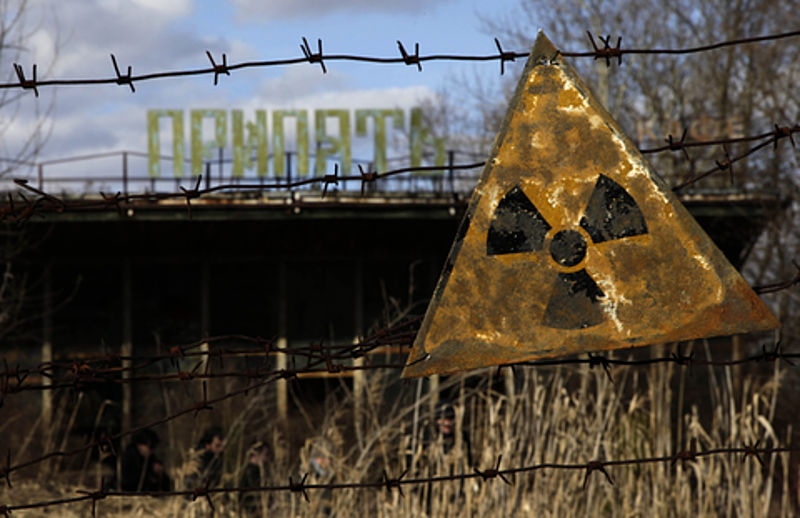
A radiation warning sign in Pripyat, the town next to the Chernobyl Nuclear Power Plant
Fukushima suffered from the results of an earthquake and tsunami, but the actual cause of the reactor meltdown was simply because of a power failure as it was an older “Generation II” reactor, which cannot handle power-failure (the same Generator II type reactors as on Three Mile Island). Current Generation III reactor types can cool themselves down without any additional safety features or human interference. Generation IV reactors, which are even safer, more efficient and clean are currently being developed for commercial use within the next 20 years or so.
So let’s compare these accidents to something like the Deepwater Horizon oil spill in 2010: 4.9 million barrels of “BP” oil spilled into the Gulf of Mexico, which doesn’t need much explanation of what this did for the environment. Present-day safety protocols in nuclear power plants are incredibly efficient because of people’s awe for the dangers of radiation. Maybe if you compare this to how oil is being dug up and in what kind of conditions the workers do this you can see the difference.
In effect, this makes nuclear power plants actually less dangerous than most other sources of energy.