
- 🥇 Best Overall: Hartsfield-Jackson Atlanta (ATL) — Decades-long #1 with 106.3 million passengers and unmatched domestic connectivity.
- 💰 Best for International: Dubai International (DXB) — Premier global hub handling 95.2 million with seamless long-haul connections.
- 📈 Fastest Rising: Shanghai Pudong (PVG) — Surged to 5th with 10.7% growth to 85 million passengers.
- ✈️ Best European Hub: London Heathrow (LHR) — Reliable transatlantic gateway with 84.5 million passengers.
The aviation industry rebounded strongly in 2025, with global passenger traffic reaching 9.8 billion according to ACI World. These 25 airports handled a disproportionate share of that volume, serving as critical nodes for business travel, tourism, and cargo.
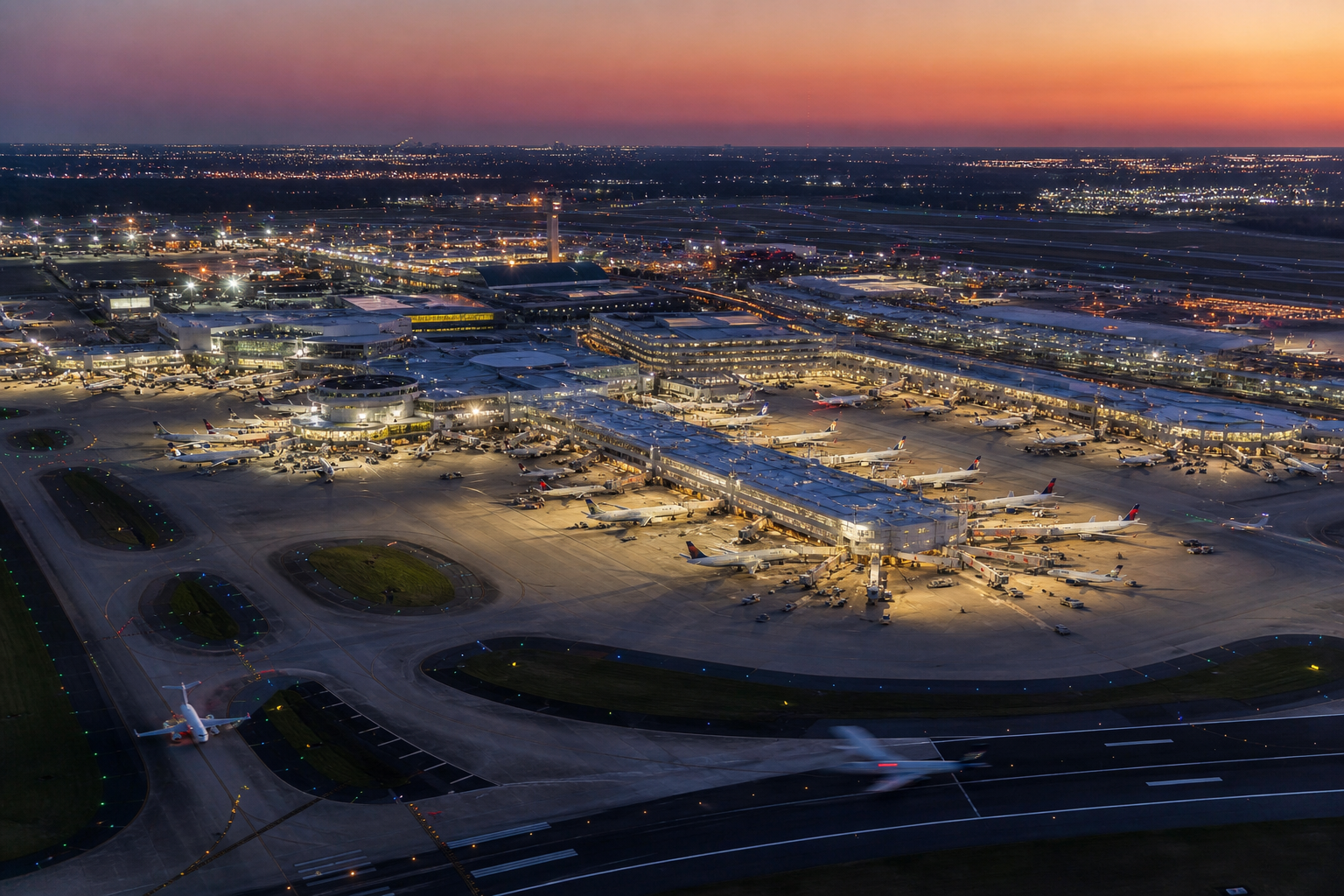
1Hartsfield-Jackson Atlanta International Airport (ATL)
Best for: Frequent US domestic flyers and Delta Air Lines passengers seeking maximum flight options.
Atlanta remains the world's busiest airport for the 26th consecutive year (excluding 2020), processing 106,302,208 passengers in 2025. Its massive domestic network and efficient operations keep it ahead of all competitors.
Home to Delta's largest hub, ATL offers over 1,000 daily flights. Recent terminal upgrades improved security and retail experiences.
Atlanta handles more than 2,500 flights every day — averaging out to roughly one takeoff or landing every 35 seconds around the clock.
2Dubai International Airport (DXB)
Best for: International business travelers connecting between Europe, Asia, and Africa.
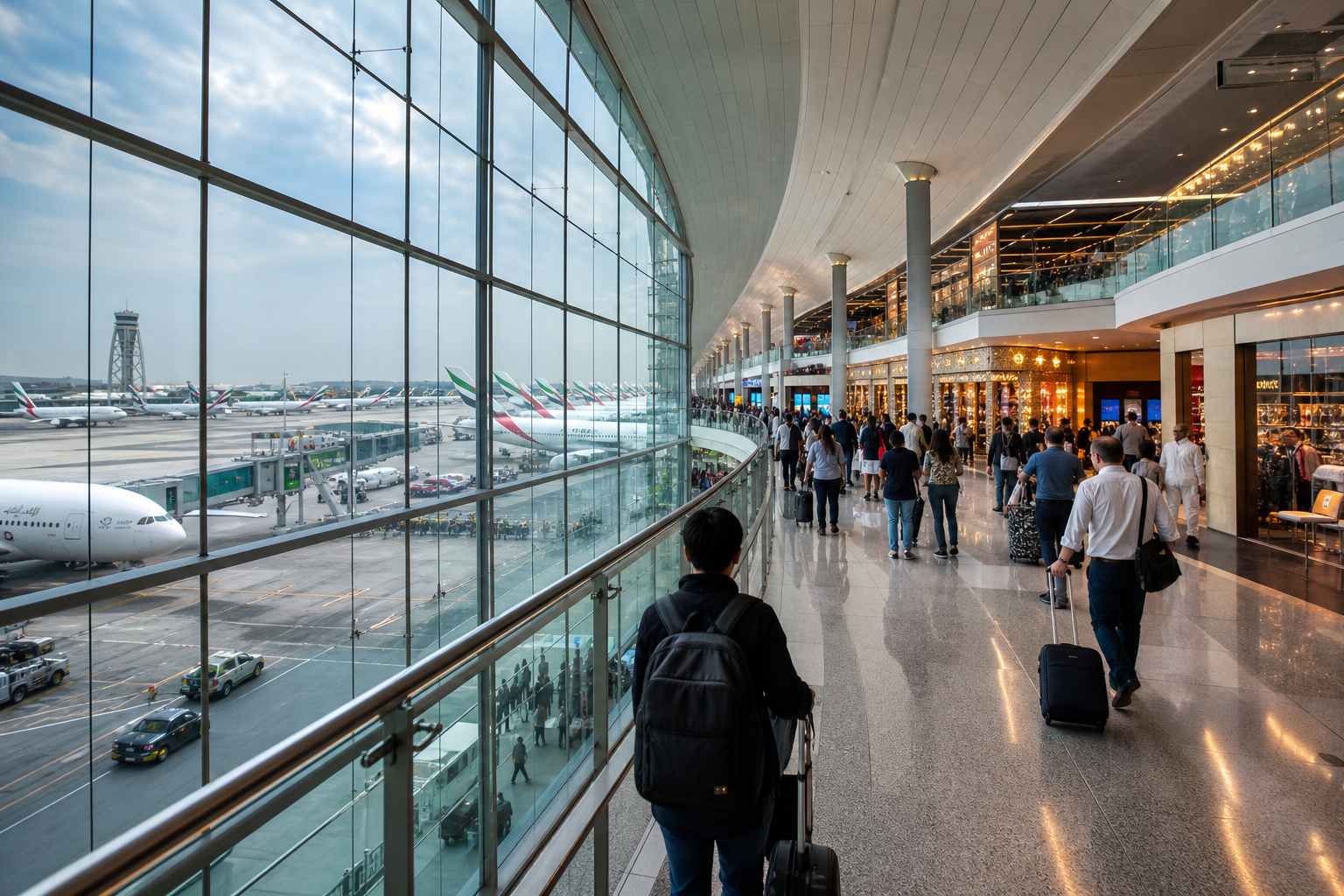
Dubai held its position as the second-busiest with 95,192,160 passengers. It leads globally in international traffic thanks to Emirates' extensive route network.
The airport features world-class lounges, the iconic Concourse A, and direct rail links to the city. Growth came from Middle East recovery and new long-haul routes.
DXB edges out many peers in luxury amenities and duty-free shopping volume.
3Tokyo Haneda Airport (HND)
Best for: Japan-bound business and leisure travelers prioritizing on-time performance.
Haneda climbed to third place with 91,679,814 passengers, up 6.7%. Strong domestic demand and international recovery fueled the rise.
Known for exceptional punctuality and efficient terminals, HND serves as JAL and ANA's primary hub with excellent rail connections to central Tokyo.
Limited international slots compared to Narita; check terminal assignments carefully.
4Dallas/Fort Worth International Airport (DFW)
Best for: American Airlines loyalists and travelers crossing the central US.
DFW handled 85,660,127 passengers, ranking fourth. It remains a key domestic and Latin America gateway.
Recent Terminal F expansion added gates and modern amenities. The airport processes high volumes of connecting traffic efficiently.
Major hub for American Airlines with extensive one-stop options to Asia and Europe.
5Shanghai Pudong International Airport (PVG)
Best for: Business travelers to China seeking rapid growth in international routes.
PVG jumped to fifth with 84,994,227 passengers, a 10.7% increase. Visa easing and international recovery drove gains.
Features advanced terminals, maglev train to downtown Shanghai, and major cargo operations alongside passenger traffic.
Strongest climber in the top 10, reflecting Asia-Pacific rebound.
6O'Hare International Airport (ORD)
Best for: Midwest connections and United Airlines hub traffic.
Chicago O'Hare served 84,814,099 passengers. It ranks high in aircraft movements globally.
Terminal 5 modernization and expanded international gates support growing long-haul service. Strong United hub with extensive domestic feeder flights.
Allow extra time for security; the airport handles peak volumes efficiently but can congest during weather events.
7Heathrow Airport (LHR)
Best for: Transatlantic business travelers and premium cabin passengers.
London's primary airport welcomed 84,482,126 passengers. It excels in international connectivity.
Home to British Airways' main hub with excellent lounges and Terminal 5 efficiency. Direct links to dozens of US cities.
For the full picture, see the ACI World official rankings announcement.
8Istanbul Airport (IST)
Best for: Connecting flights across Europe, Middle East, and Asia via Turkish Airlines.
IST processed 84,437,710 passengers, up 5.5%. Rapid infrastructure growth supports expansion.
Modern mega-terminal with vast retail and dining options. Turkish Airlines' global hub benefits from geographic positioning.
Competitive with European peers in transfer efficiency.
9Guangzhou Baiyun International Airport (CAN)
Best for: Southern China domestic and Southeast Asia routes.
CAN handled 83,582,952 passengers. Strong growth of 9.5% reflects regional recovery.
Two modern terminals with high-speed rail links. Major base for China Southern Airlines.
Consistent top-10 performer in East Asia.
10Denver International Airport (DEN)
Best for: Western US connections and United Airlines mountain region hub.
Denver served 82,427,962 passengers. Iconic tent-like terminal and efficient operations stand out.
Extensive domestic network and growing international service. Strong performance in snow-prone conditions.
Use the efficient train system between terminals.
11Indira Gandhi International Airport (DEL)
Best for: India domestic and long-haul travelers to South Asia.
Delhi handled 79,259,890 passengers. Steady growth supports India's aviation boom.
Terminal 3 offers modern facilities; major IndiGo and Air India hub.
Key gateway for business and tourism to northern India.
12Seoul Incheon International Airport (ICN)
Best for: East Asia connections and Korean Air/Asiana passengers.
Incheon served 74,071,475 passengers. Excellent service reputation and expansion plans.
World-class facilities with high passenger satisfaction scores. Strong international route network.
You can cross-check these figures against the full ACI 2025 data on Wikipedia.
13Los Angeles International Airport (LAX)
Best for: West Coast international arrivals and entertainment industry travel.
LAX welcomed 73,709,594 passengers. Major gateway for Asia-Pacific routes.
Ongoing modernization includes new terminals and people mover. Delta and United hubs.
Traffic congestion on surrounding roads; use FlyAway buses where possible.
14Charles de Gaulle Airport (CDG)
Best for: European and African connections via Air France.
Paris CDG handled 72,029,407 passengers. Major continental hub.
Extensive terminal network and TGV rail integration. Strong long-haul presence.
Reliable choice for business travelers to France and beyond.
15Beijing Capital International Airport (PEK)
Best for: Northern China domestic flights and international access to the capital.
PEK processed 70,742,712 passengers. Solid recovery with 7.5% growth.
Three terminals with efficient operations; major Air China hub.
Express rail to downtown Beijing saves time.
16Singapore Changi Airport (SIN)
Best for: Premium leisure and business travelers valuing exceptional facilities.
Changi welcomed 69,980,000 passengers. Consistently tops service awards.
Jewel waterfall, gardens, and top-tier lounges define the experience. Singapore Airlines' home base.
Changi's Jewel complex houses the HSBC Rain Vortex — at 40 metres tall, it's the world's tallest indoor waterfall, built inside a working airport terminal.
Often rated the world's best airport for passenger experience.
17Amsterdam Airport Schiphol (AMS)
Best for: European connecting flights and KLM hub traffic.
Schiphol handled 68,800,000 passengers. Efficient single-terminal design.
Strong network across Europe and beyond. Excellent shopping and art installations.
Reliable northern European gateway.
18Adolfo Suárez Madrid–Barajas Airport (MAD)
Best for: Iberian Peninsula and Latin America connections via Iberia.
Madrid served 68,179,054 passengers. Strong growth of 3%.
Modern terminals and efficient operations. Key hub for Europe-South America routes.
ACI World breaks down the trends further in its detailed 2025 analysis.
19Shenzhen Bao'an International Airport (SZX)
Best for: Southern China tech corridor and domestic travel.
SZX handled 66,485,213 passengers, up 7.4%. Rapid regional growth.
Modern facilities serving the Pearl River Delta economic zone.
Rising star among Chinese airports.
20Kuala Lumpur International Airport (KUL)
Best for: Southeast Asia connections and Malaysia Airlines traffic.
KUL processed 63,300,000 passengers, up 10.8%. Strong recovery.
Two terminals with good rail links to the city. Major low-cost and full-service hub.
Use the efficient Express Rail Link for quick city access.
21Frankfurt Airport (FRA)
Best for: Central European business and Lufthansa hub operations.
Frankfurt handled 63,189,666 passengers. Reliable continental gateway.
Extensive long-haul network and efficient transfers. Strong cargo operations too.
Key financial district access point.
22Suvarnabhumi Airport (BKK)
Best for: Thailand tourism and Southeast Asia regional travel.
Bangkok handled 62,902,183 passengers. Steady 1.1% growth.
Modern facilities with good connectivity. Thai Airways' primary hub.
Competes with Don Mueang for low-cost traffic.
23John F. Kennedy International Airport (JFK)
Best for: New York City international arrivals and premium transatlantic flights.
JFK served 62,629,455 passengers. Major US East Coast gateway.
Terminal redevelopment ongoing; Delta and JetBlue hubs. Strong European and Caribbean routes.
AirTrain provides seamless connections between terminals and subway.
24Hong Kong International Airport (HKG)
Best for: Greater Bay Area business and Asia-Pacific connections.
HKG welcomed 60,992,000 passengers, up 14.9%. Strong rebound.
World-class facilities and direct city links. Cathay Pacific's home base.
Key financial hub airport with excellent service.
25Orlando International Airport (MCO)
Best for: Leisure travelers heading to theme parks and Florida tourism.
MCO handled 57,675,573 passengers. Major leisure destination gateway.
Recent terminal expansions and South Terminal addition. Strong domestic and international leisure routes.
Primary entry point for Walt Disney World and Universal visitors.
These airports collectively illustrate the scale and resilience of global aviation. Business travelers should monitor ACI reports for future shifts driven by economic and geopolitical factors.
Frequently Asked Questions
How is airport passenger traffic measured?
ACI World collects official data from member airports on total enplaned and deplaned passengers, including both domestic and international. Figures represent calendar-year totals and are verified through standardized reporting.
Why does Atlanta consistently rank #1?
Atlanta's combination of massive domestic demand, Delta's largest hub operation, and efficient infrastructure allows it to process more passengers than any other single airport year after year.
Are these rankings based on 2025 or 2026 data?
The rankings reflect full-year 2025 passenger traffic released by ACI World in April 2026. Preliminary 2026 monthly data shows continued growth but full-year figures are not yet available.
How do international vs domestic numbers differ?
Atlanta leads overall due to domestic volume, while Dubai dominates pure international traffic. Many Asian airports show strong mixed traffic recovery post-pandemic.
Which airport offers the best passenger experience among the busiest?
Singapore Changi and Incheon frequently win awards for facilities and service despite high volumes, thanks to investment in amenities and efficiency.
Will any airport overtake Atlanta soon?
Dubai and Asian hubs are growing fast, but Atlanta's domestic scale and operational efficiency make it unlikely to lose the top spot in the near term according to current trends.
Where can I find the most current monthly updates?
Check the ACI World website or individual airport authority reports for preliminary monthly statistics while awaiting the next annual release.


