
You will find here the complete chronological list of every individual who has served as President of the United States, presented in strict order of their first inauguration. This reference matters because the presidency shapes national policy, foreign relations, and constitutional interpretation across more than two centuries of American history.
1George Washington (1789-1797)
Key detail: Unaffiliated | When: April 30, 1789 – March 4, 1797
George Washington led the Continental Army to victory in the Revolutionary War and became the nation's first president. He set enduring precedents including the two-term tradition and the use of a cabinet of advisors. His leadership established the executive branch as a stable institution.
2John Adams (1797-1801)
Key detail: Federalist | When: March 4, 1797 – March 4, 1801
John Adams served as Washington's vice president before winning the presidency in his own right. He avoided war with France through diplomacy and signed the Alien and Sedition Acts amid partisan tensions. Adams was the first president to reside in the White House.
3Thomas Jefferson (1801-1809)
Key detail: Democratic-Republican | When: March 4, 1801 – March 4, 1809
Thomas Jefferson authored the Declaration of Independence and expanded the nation through the Louisiana Purchase. He promoted agrarian ideals and reduced the size of the federal government. Jefferson's presidency doubled the geographic size of the United States.
4James Madison (1809-1817)
Key detail: Democratic-Republican | When: March 4, 1809 – March 4, 1817
James Madison is known as the Father of the Constitution for his central role in drafting it. He led the country through the War of 1812 against Britain. Madison's administration saw the burning of Washington, D.C. by British forces.

5James Monroe (1817-1825)
Key detail: Democratic-Republican | When: March 4, 1817 – March 4, 1825
James Monroe presided over the Era of Good Feelings, a period of relative political harmony. He issued the Monroe Doctrine warning European powers against further colonization in the Americas. Monroe's two terms saw the acquisition of Florida from Spain.
6John Quincy Adams (1825-1829)
Key detail: Democratic-Republican | When: March 4, 1825 – March 4, 1829
John Quincy Adams won the controversial 1824 election decided by the House of Representatives. He promoted internal improvements such as roads and canals. Adams later served in Congress after his presidency.
7Andrew Jackson (1829-1837)
Key detail: Democratic | When: March 4, 1829 – March 4, 1837
Andrew Jackson was the first president from the western frontier and expanded executive power. He signed the Indian Removal Act leading to the Trail of Tears. Jackson vetoed the recharter of the Second Bank of the United States.
8Martin Van Buren (1837-1841)
Key detail: Democratic | When: March 4, 1837 – March 4, 1841
Martin Van Buren inherited an economic panic and established the independent Treasury system. He was the first president born after American independence. Van Buren's single term focused on stabilizing the banking system.
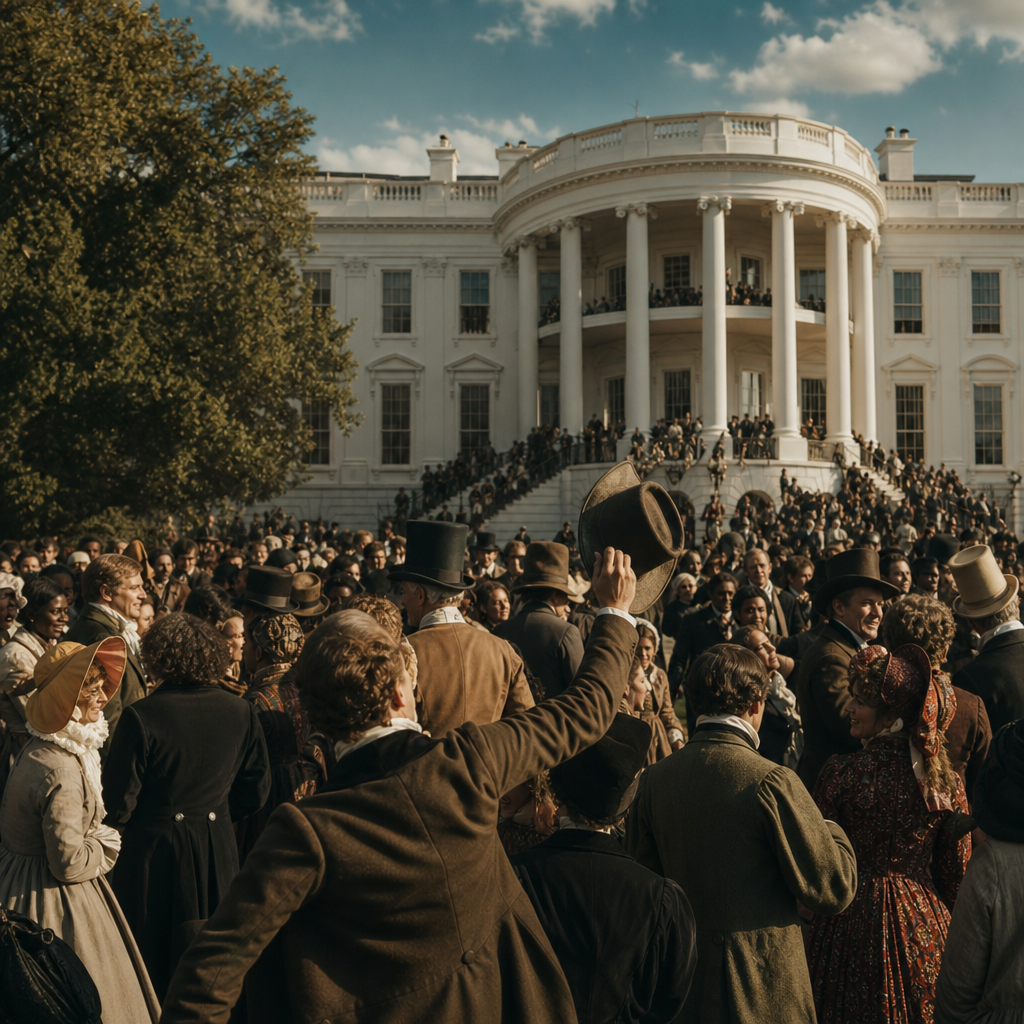
9William Henry Harrison (1841)
Key detail: Whig | When: March 4, 1841 – April 4, 1841
William Henry Harrison delivered the longest inaugural address in history and died of pneumonia one month later. He was the first president to die in office. Harrison's brief term established the precedent of vice presidential succession.
10John Tyler (1841-1845)
Key detail: Whig (later independent) | When: April 4, 1841 – March 4, 1845
John Tyler became the first vice president to succeed to the presidency upon Harrison's death. He annexed Texas and asserted strong executive authority. Tyler's actions solidified the constitutional line of succession.
... ...
47Donald Trump (2017-2021 and 2025-present)
Key detail: Republican | When: January 20, 2017 – January 20, 2021; January 20, 2025 – present
Donald Trump is the only president to serve two non-consecutive terms, winning election in both 2016 and 2024. His administrations focused on tax reform, immigration policy, and judicial appointments. Check the White House official site for current administration details.
The full list of presidents of the United States confirms the numbering and term details used here. Consult the USA.gov presidents resource for additional official biographies and historical context.
In summary, these 47 presidencies illustrate the evolution of American leadership from the founding era through modern challenges. Each president left a distinct mark on the nation's trajectory and constitutional framework.
Frequently Asked Questions
How many presidents have there been?
Forty-five individuals have served 47 presidencies because Grover Cleveland and Donald Trump each served two non-consecutive terms. The numbering reaches 47 with the current president.
Who was the first president?
George Washington served as the first president from 1789 to 1797. He established many foundational precedents for the office.
Which president served the longest?
Franklin D. Roosevelt served 12 years across four terms from 1933 to 1945. The 22nd Amendment later limited presidents to two elected terms.
Who is the current president in 2026?
Donald Trump is the 47th president serving his second non-consecutive term that began on January 20, 2025.
Has any president been elected to non-consecutive terms besides Trump?
Yes, Grover Cleveland served as the 22nd and 24th president with a single term in between. Trump became the second to achieve this in 2025.
What party did most early presidents belong to?
Early presidents were largely unaffiliated or Democratic-Republican before the modern two-party system solidified in the 1850s. The Whig and Democratic parties dominated mid-19th century politics.
Which president died in office most recently before 2026?
John F. Kennedy was assassinated in 1963. No president has died in office since that time.
Where can I find official portraits and biographies?
The White House Historical Association and National Archives maintain extensive collections of presidential portraits and documents for public reference.


