
The average American produces 4.9 pounds of household waste per day — that's 1,788 pounds per year, per person. Nationwide, the US generates 292.4 million tons of municipal solid waste annually, according to the EPA's latest data. Only about 32% of that gets recycled or composted. The rest goes to landfills, where organic waste produces methane — a greenhouse gas 28 times more potent than CO₂. The good news? Roughly 70% of what we throw away could be recycled, composted, or avoided entirely. Here are 50 practical, actionable tips to reduce waste at home, organised by area of your life.
| Area | Average Annual Waste (lbs) | Reducible % | Key Action |
|---|---|---|---|
| Kitchen & Food | 500 lbs | 80% | Meal plan + compost |
| Packaging & Plastics | 300 lbs | 90% | Buy in bulk + reuse |
| Paper & Cardboard | 250 lbs | 95% | Go digital + recycle |
| Clothing & Textiles | 120 lbs | 85% | Buy less + donate |
| Bathroom & Personal Care | 80 lbs | 75% | Switch to bars + refills |
| Total | 1,250 lbs | ~83% | — |
Kitchen & Food Waste
Your kitchen is the single biggest source of household waste. Americans throw away 30-40% of the food they buy — about $1,500 worth per family per year. Cutting food waste saves money and methane. If you're looking for broader ways to cut household food costs, see our 10 ways your family can save money on food this year.
1. Plan Your Meals Weekly
Before grocery shopping, plan every meal for the week. Check your fridge and pantry first to use what you already have. A meal plan reduces impulse buys by 25% and cuts food waste by up to 33%, according to a 2024 study published in the Journal of Cleaner Production. Use a whiteboard or app — even a simple notes file works.
2. Shop With a List — and Stick to It
People who shop with a list buy 23% less food they end up throwing away. Take a photo of your fridge before you leave home so you don't duplicate purchases. Group your list by store section to avoid backtracking past tempting displays.
3. Buy Imperfect Produce
"Ugly" fruits and vegetables are nutritionally identical to perfect ones but often get discarded by stores. Apps like Imperfect Foods and Misfits Market sell cosmetically imperfect produce at 30-50% less. You save money and prevent food waste at the farm level — where the EPA estimates 33% of all US food waste originates.
4. Store Food Correctly
Most food waste happens because of poor storage. Keep apples away from other produce (they emit ethylene gas that speeds ripening). Store herbs in water like flowers. Wrap leafy greens in a damp cloth. Put a paper towel in salad containers to absorb moisture. These simple tricks extend shelf life by 3-7 days.
5. Learn to Preserve
Before food goes bad, freeze it, pickle it, or dehydrate it. Bananas going brown? Peel and freeze for smoothies. Tomatoes getting soft? Roast and freeze in olive oil. Herbs wilting? Chop and freeze in olive oil ice cube trays. The USDA estimates proper preservation could prevent 14% of all US food waste.
6. Use Every Part of the Vegetable
Carrot tops make excellent pesto. Broccoli stems are delicious stir-fried. Potato skins become crispy snacks. Beet greens sauté like spinach. Celery leaves add flavour to soups. Using the whole vegetable can reduce your kitchen waste by 15-20% and adds variety to your cooking. For more kitchen inspiration, check our 7 different ways to cook eggs — a great zero-waste protein.
7. Start a Compost Bin
Composting diverts 30% of household waste from landfill. You can compost fruit and vegetable scraps, coffee grounds, eggshells, tea bags, paper, and yard trimmings. A backyard bin produces rich soil in 3-6 months. No yard? Indoor bokashi bins or worm farms work in apartments. The EPA reports that composting one ton of food waste saves the equivalent of 2.5 tons of CO₂ emissions.
8. Ditch Plastic Wrap — Use Beeswax Wraps
Beeswax wraps are reusable for up to a year, mould to any container with the warmth of your hands, and are fully compostable at end of life. They replace an estimated 24 rolls of plastic wrap per year for the average household. A set of three costs $18-25 and pays for itself in 3 months.
9. Buy in Bulk
Buying rice, pasta, oats, nuts, and spices from bulk bins reduces packaging waste by up to 86%. Bring your own containers — most stores allow it if you weigh them first. A 2023 study by the University of Portsmouth found that bulk buying also saves an average of 42% on grocery costs for staple foods.
10. Cook the Right Portions
Cooking too much is the #1 cause of plate waste. Use a portion calculator (the USDA's "MyPlate" tool is free). Serve on smaller plates — studies show people serve themselves 22% less food on 9-inch plates vs 12-inch plates. Leftovers are fine, but only if they actually get eaten.
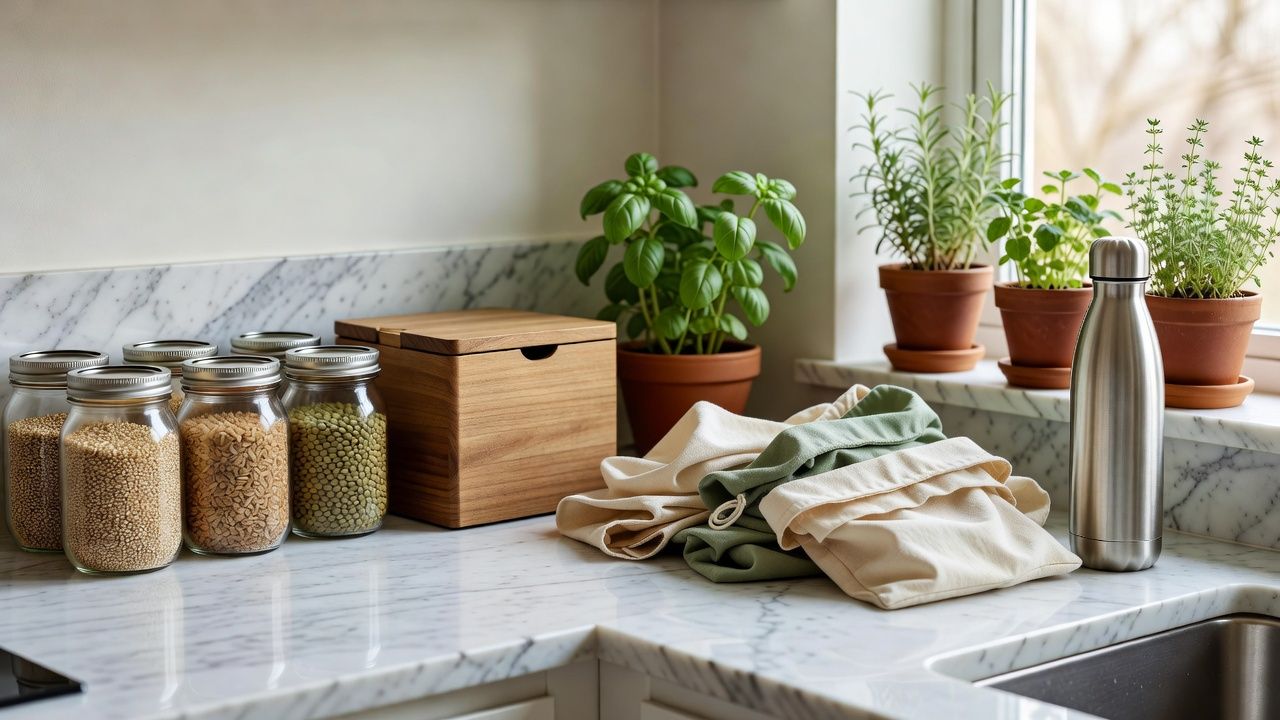
Packaging & Plastics
Packaging accounts for 28% of all US municipal solid waste — over 82 million tons per year. The plastic you toss today will still exist in 400 years. Here's how to cut it down.
11. Switch to Reusable Shopping Bags
The average American family takes home 1,500 plastic shopping bags per year. Less than 1% are recycled. A single reusable bag replaces 700 disposable ones over its lifetime. Keep them in your car, by the front door, or in your purse so you never forget them. The UN Environment Programme estimates a global plastic bag ban could reduce marine plastic pollution by 70%.
12. Invest in Reusable Produce Bags
Those thin plastic bags in the produce section are used for an average of 12 minutes before being discarded. Cotton or mesh produce bags cost $10-15 for a set of 8, last years, and keep produce fresher than plastic. You can also just skip the bag entirely for items like bananas, avocados, and onions.
13. Choose Glass Over Plastic
Glass is infinitely recyclable without quality loss — plastic can only be recycled 1-2 times before degrading. Buy condiments, drinks, and pantry staples in glass jars. Reuse the jars for food storage, drinking glasses, or candle holders. Glass recycling saves 42% of the energy needed to make new glass.
14. Refuse Single-Use Cutlery and Straws
Keep a set of bamboo or stainless steel cutlery in your bag. Americans use 170 million plastic straws per day. Simply saying "no straw, no cutlery" when ordering takeout prevents 10-15 plastic items per week from entering the waste stream. If you need a straw, carry a reusable metal or silicone one.
15. Make Your Own Cleaning Products
Vinegar, baking soda, and castile soap clean 90% of household surfaces without the plastic bottles. A spray bottle of diluted vinegar (1:1 with water) costs $0.30 per refill versus $4.00 for commercial spray. This eliminates 15-20 plastic bottles per year and avoids harmful chemicals. For more on keeping your home healthy, see our article on health issues from not cleaning your carpets.
16. Buy Concentrated Refills
Many cleaning brands now offer concentrated refills — you keep the spray bottle and just add water. This reduces plastic packaging by 80% and shipping emissions by 90%. Brands like Blueland, Grove Collaborate, and Ecover offer refill systems for everything from dish soap to laundry detergent.
17. Use Bar Soap Instead of Liquid Soap
Bar soap uses no plastic packaging, requires 30% less water to manufacture, and lasts 2-3 times longer than liquid soap in a pump bottle. A 2023 lifecycle analysis found bar soap has a 25% lower carbon footprint than liquid soap. Switch for body wash, hand soap, and even shampoo.
18. Choose Products in Cardboard or Paper Packaging
When you can't avoid packaging, choose paper or cardboard over plastic. Paper is recycled at a rate of 68% in the US versus 9% for plastic. Toothpaste tablets in paper pouches, deodorant in cardboard tubes, and laundry powder in cardboard boxes all eliminate plastic bottles.
19. Repurpose Glass Jars as Food Storage
Instead of buying plastic Tupperware, save glass jars from pasta sauce, jam, and pickles. They're free, don't absorb odours or stains, are microwave and dishwasher safe (without the lid), and last decades. Label them with a grease pencil or washi tape. A typical household accumulates 20-30 jars per year.
20. Avoid Individually Wrapped Items
Individually wrapped cheese slices, snack packs, and single-serve yogurts generate 4-10x more packaging per unit of food. Buy the full block of cheese and slice it yourself. Get a large yogurt tub and portion into small jars. The cost savings average 35% and packaging waste drops by 80%.
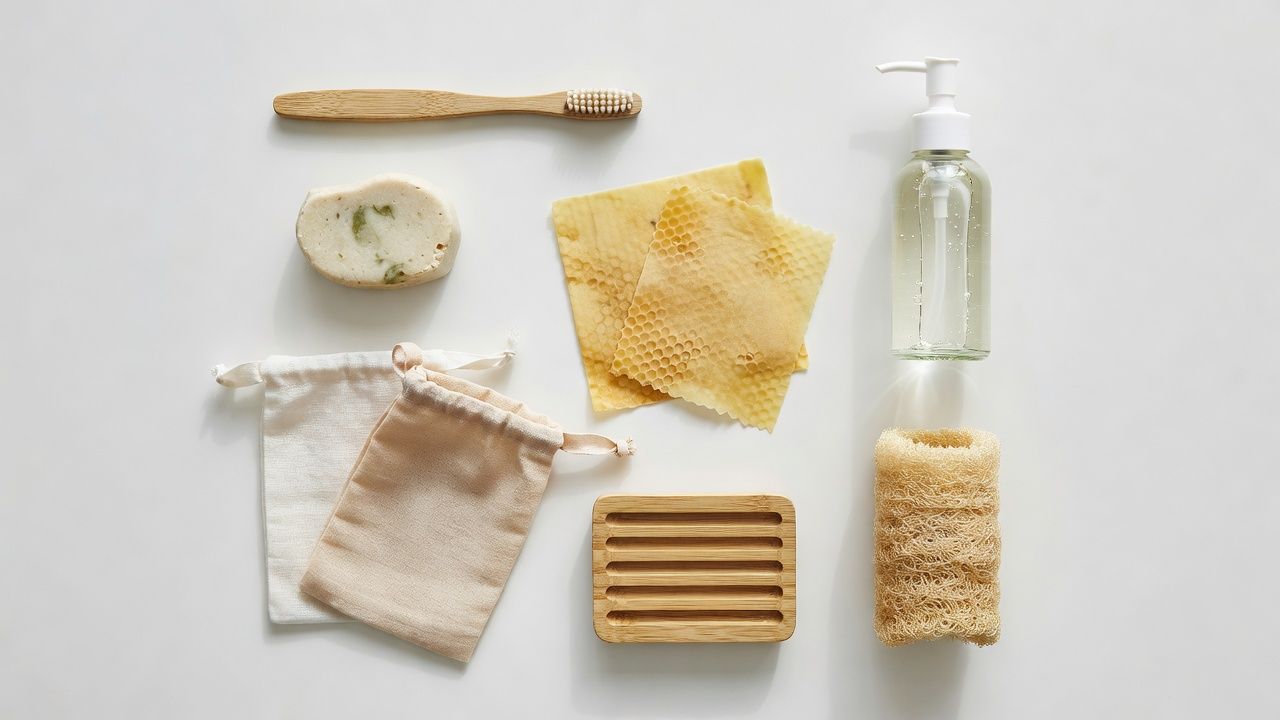
Bathroom & Personal Care
The average bathroom generates 15 billion plastic bottles per year in the US alone. Most aren't recycled because they're contaminated with product residue. Here's how to go low-waste in the smallest room of the house.
21. Switch to Shampoo and Conditioner Bars
Shampoo bars last 80-100 washes — equivalent to 2-3 bottles of liquid shampoo — with zero plastic packaging. They cost $8-12 and save $30-40 per year. Brands like Ethique, Lush, and HiBar make bars for every hair type. The switch eliminates 3-4 plastic bottles per person per year.
22. Use a Safety Razor
Disposable razors generate over 2 billion units of plastic waste per year in the US. A stainless steel safety razor costs $25-40, lasts decades, and uses replacement blades that cost $0.10 each (versus $2-4 for cartridge refills). The average person saves $200+ per year and prevents 50+ plastic razors from entering landfill.
23. Switch to Bamboo Toothbrushes
Every plastic toothbrush ever made still exists in a landfill or ocean. Bamboo toothbrushes are compostable (remove the nylon bristles first) and cost $3-5 each. With 3-4 toothbrushes per person per year, a family of four prevents 12-16 plastic toothbrushes from entering the waste stream annually.
24. Try Reusable Cotton Rounds
Disposable cotton rounds are single-use, bleached, and come in plastic packaging. Reusable bamboo or organic cotton rounds can be washed 200+ times. A set of 16 costs $12 and replaces 1,800+ disposable rounds per year. They work for makeup removal, toner application, and first aid.
25. Use Refillable Deodorant
Refillable deodorant systems (like Wild, Myro, and Native) use compostable or recyclable refills that click into a reusable case. This eliminates 3-5 plastic deodorant sticks per person per year. The refills cost about the same as conventional deodorant ($5-7) but generate 90% less packaging waste.
26. Switch to Menstrual Cups or Period Underwear
The average person who menstruates uses 11,000 disposable period products in their lifetime, generating 200 pounds of waste. A menstrual cup costs $30-40, lasts 10 years, and replaces 2,500 tampons. Period underwear ($25-35 per pair) lasts 2-3 years. Both options save $100-200 per year and eliminate significant plastic and cotton waste.
27. Make Your Own Face Scrub
Store-bought face scrubs contain microplastics that pollute waterways and come in plastic tubes. Mix 1 tablespoon finely ground oats with 1 teaspoon honey and a splash of water for a gentle, zero-waste scrub. Coffee grounds mixed with coconut oil make an excellent body scrub. Both cost pennies and use ingredients you already have.
28. Install a Low-Flow Showerhead
Low-flow showerheads reduce water usage by 40-60% without sacrificing pressure. They cost $20-50 and save the average family 2,900 gallons of water and $50-80 in energy costs per year. Less hot water also means less energy used for heating — a double win for reducing your environmental footprint.
Paper, Mail & Digital
29. Opt Out of Junk Mail
Americans receive 87.8 billion pieces of advertising mail per year — enough to fill 450,000 garbage trucks. Register at DMAchoice.org and OptOutPrescreen.com to stop credit card offers and catalogues. This takes 10 minutes and eliminates 41 pounds of paper waste per year per household.
30. Switch to Paperless Billing
Every bank, utility, and insurance company offers paperless billing. It takes 5 minutes to switch and saves 10-15 pounds of paper per year. You also reduce the carbon footprint of mailing — the USPS delivers 146 billion pieces of mail annually, generating 19 million metric tons of CO₂.
31. Use Cloth Napkins and Towels
A family of four using paper napkins for three meals a day goes through 4,380 napkins per year. A set of 12 cloth napkins costs $20-30, lasts years, and can be thrown in with regular laundry. The switch saves $60-80 per year and eliminates 15 pounds of paper waste.
32. Print Less — and Double-Sided When You Do
The average office worker prints 10,000 pages per year. Set your default to double-sided printing. Use digital signatures (DocuSign, Adobe Sign) instead of printing, signing, and scanning. For personal printing, ask yourself if you really need a hard copy — most documents can be stored digitally.
33. Cancel Phone Books and Directories
If you still receive phone books, you can opt out at YellowPagesOptOut.com. Each phone book weighs 3-5 pounds and most go straight to the bin. Over 650,000 tons of phone books are distributed annually in the US — most end up in landfill.
34. Reuse Scrap Paper
Print on the back of used paper for grocery lists, notes, and kid's drawings. Cut used paper into quarters and keep a stack by the phone. One-sided printed paper can be reused for 50% of your note-taking needs, halving your paper consumption.
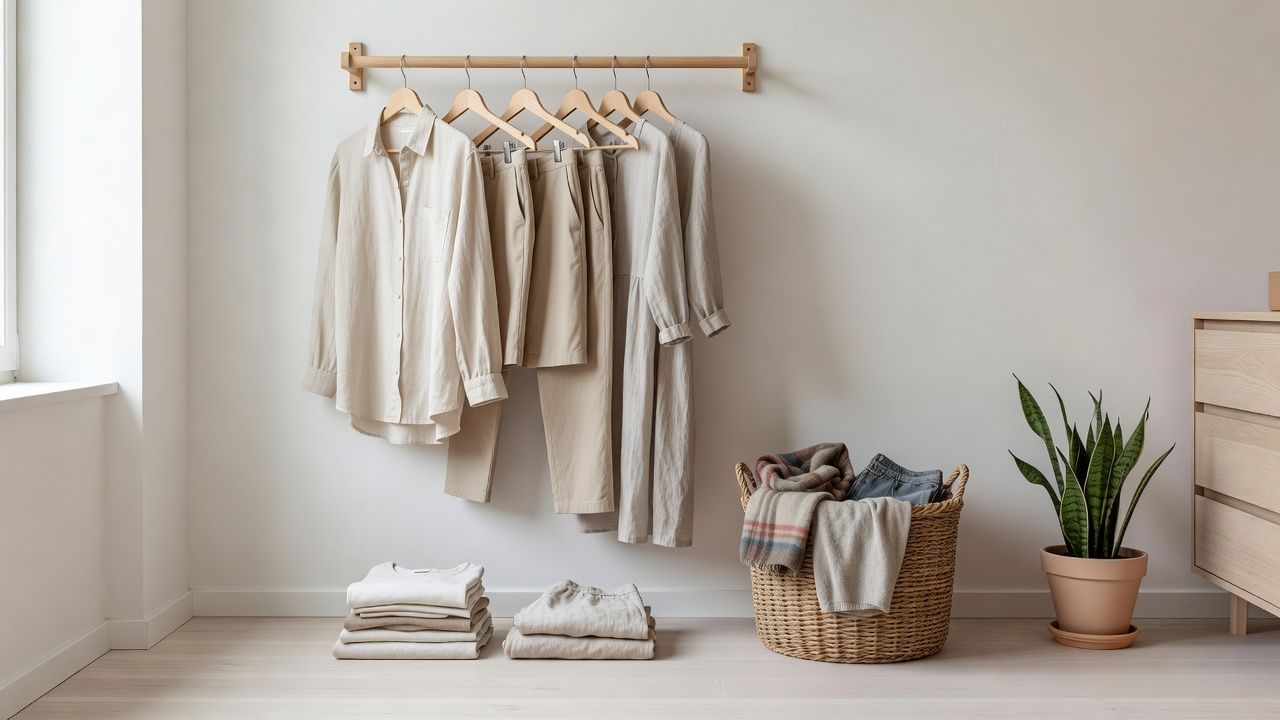
Clothing & Textiles
35. Buy Second-Hand First
The fashion industry produces 92 million tons of textile waste per year. Buying second-hand extends the life of existing clothing and avoids new production. Thrift stores, eBay, Poshmark, and Vinted offer quality clothing at 70-90% off retail. A 2024 ThredUp report found that buying one second-hand item instead of new saves 1.3 pounds of CO₂.
36. Repair Before Replacing
Learn basic repairs: sewing on buttons, patching holes, fixing zippers, and rehemming. A $3 sewing kit can extend the life of a $50 shirt by years. The average American throws away 81 pounds of clothing per year — 85% of which could be repaired or donated. YouTube has thousands of free repair tutorials.
37. Donate or Sell What You Don't Wear
If you haven't worn something in a year, donate it. Goodwill, Salvation Army, and local shelters accept clothing. For higher-end items, sell on Poshmark, Depop, or Vinted. The EPA estimates 13 million tons of textiles are landfilled each year — 95% could be reused or recycled.
38. Host a Clothing Swap
Invite 6-10 friends to bring clothes they no longer wear. Everyone leaves with "new" items at zero cost and zero waste. Clothing swaps are social, fun, and can refresh your wardrobe without buying anything new. They're especially useful for kids' clothes, which are outgrown long before they're worn out.
39. Choose Quality Over Quantity
A $80 wool sweater that lasts 10 years is cheaper than four $20 acrylic sweaters that pill and fall apart in one season. Look for natural fibres (cotton, wool, linen, hemp), reinforced seams, and timeless styles. The "cost per wear" of quality clothing is 60-80% lower than fast fashion.
40. Use Microfibre Catching Bags
Synthetic clothing (polyester, fleece, acrylic) sheds microfibres in the wash — 700,000 fibres per load, which flow into waterways. A Guppyfriend washing bag ($30) or Cora Ball ($40) catches 26-86% of microfibres. Wash synthetics less frequently, in cold water, and on shorter cycles to reduce shedding.
Home, Energy & General
41. Grow Your Own Herbs and Vegetables
Even a windowsill can grow basil, mint, chives, and parsley. A 4×4 foot raised bed produces 20-30 pounds of vegetables per season. Growing your own eliminates packaging, transport emissions, and food waste (you harvest what you need). Start with easy crops: lettuce, radishes, tomatoes, and herbs. For inspiration, see our list of 10 herbal plants you can grow in your home garden.
42. Install a Water Filter
A under-sink or pitcher water filter eliminates the need for bottled water. The average American buys 167 plastic water bottles per year — a filter system pays for itself in 2 months and prevents 167 bottles per person from entering the waste stream. The EPA regulates tap water more strictly than the FDA regulates bottled water, so filtered tap is often cleaner.
43. Use Reusable Coffee Filters
A single reusable metal or cloth coffee filter replaces 365 paper filters per year. Metal filters ($8-15) last indefinitely and allow more oils through for a richer brew. If you use pods, switch to a refillable stainless steel pod ($12) — Keurig users throw away 10 billion plastic pods per year, enough to circle the Earth 12 times.
44. Repurpose Old T-Shirts as Cleaning Rags
Instead of buying paper towels, cut worn-out t-shirts into 10×10 inch squares. They're absorbent, washable, and free. A family that switches to cloth rags saves $150-200 per year on paper towels and prevents 100+ rolls from entering landfill. Keep a basket of clean rags under the sink and a separate bin for dirty ones.
45. Choose Energy-Efficient Appliances
ENERGY STAR appliances use 10-50% less energy than standard models. An ENERGY STAR refrigerator saves $200 over its lifetime. LED bulbs use 75% less energy and last 25 times longer than incandescent. Smart home devices can also help — see our picks for 12 smart home gadgets that upgrade every room, many of which improve energy efficiency.
46. Buy Used Furniture and Appliances
Facebook Marketplace, Craigslist, and Habitat for Humanity ReStores sell quality furniture and appliances at 50-90% off retail. Buying used avoids manufacturing emissions, keeps items out of landfill, and often gets you better-quality construction than new budget items. The EPA estimates 12.1 million tons of furniture are landfilled each year in the US.
47. Use Reusable Batteries
Rechargeable batteries cost more upfront ($20-30 for a starter kit with charger) but save $200+ over their lifetime. One rechargeable AA replaces 1,000 disposable batteries. They're especially cost-effective for high-drain devices like game controllers, cameras, and kids' toys. Look for NiMH batteries — they hold charge longer and don't have the memory effect of older rechargeables.
48. Rethink Gift Giving
Wrapping paper generates 4 million tons of waste each holiday season. Wrap gifts in newspaper, fabric (furoshiki style), or reusable gift bags. Give experiences — concert tickets, cooking classes, museum memberships — instead of physical items. For kids, a "something you want, something you need, something to wear, something to read" rule keeps gifts meaningful and minimal.
49. Set Up a Recycling Station
Make recycling easy with clearly labelled bins in your kitchen or garage. Rinse containers before recycling — contamination is the #1 reason recyclables get rejected. Check your local recycling guidelines (they vary by municipality) at Earth911.com or your city's website. Post the guidelines above the bins so everyone in the household knows what goes where.
50. Conduct a Waste Audit
Once a year, save everything you throw away for one week. Sort it into categories: food, plastic, paper, glass, metal, textile, other. Weigh each category. This visual snapshot shows exactly where your waste comes from and what to tackle next. Most people are shocked to see how much is food and packaging — the two easiest categories to reduce. The EPA's materials and waste facts page provides national benchmarks to compare against.
Frequently Asked Questions
How much waste does the average household produce?
The average American household produces 4.9 pounds of waste per person per day — about 1,788 pounds per person per year. A family of four generates roughly 7,152 pounds annually, of which approximately 83% could be recycled, composted, or avoided entirely.
What is the easiest way to start reducing waste at home?
Start with the three highest-impact actions: (1) plan meals and buy only what you need, (2) switch to reusable bags and bottles, and (3) start composting food scraps. These three changes alone can reduce household waste by 40-50%.
Does reducing waste at home actually save money?
Yes. The average family throws away $1,500 in food annually. Reusable products (bags, bottles, razors, napkins) save $300-500 per year. Buying in bulk saves 42% on staples. Total annual savings from waste reduction typically range from $1,800 to $2,500 per household.
What can I compost at home?
Fruit and vegetable scraps, coffee grounds, tea bags, eggshells, paper, cardboard, yard trimmings, and hair. Do not compost meat, dairy, oils, or diseased plants in a home bin. Composting diverts 30% of household waste from landfill and produces nutrient-rich soil for gardens.
Is recycling actually effective?
Recycling one ton of paper saves 17 trees, 7,000 gallons of water, and 4,000 kWh of energy. Recycling aluminium saves 95% of the energy needed to make new aluminium from ore. However, recycling is a last resort — reducing and reusing are always better. The waste hierarchy is: reduce, reuse, recycle, dispose.


