
Best Rock Albums of All Time
Rock music has defined generations with its raw energy and storytelling power. These albums capture pivotal moments in history and culture that continue to inspire new listeners in 2026.
1Abbey Road by The Beatles (1969)
Abbey Road stands as the Beatles' final studio album recorded together, featuring the iconic medley on side two that seamlessly blends multiple tracks into a symphonic rock experience. The album includes standout songs like "Come Together," "Something," and "Here Comes the Sun," recorded at the famous Abbey Road Studios in London with innovative production techniques from George Martin. It topped charts worldwide upon release and has sold over 30 million copies.
Its lasting appeal comes from the perfect balance of pop craftsmanship and experimental flair, with Paul McCartney's bass lines and John Lennon's lyrical depth shining through every track. The cover photo of the band crossing the street has become one of the most replicated images in music history, symbolizing their creative peak before the breakup.
Compared to their earlier work like Sgt. Pepper's, Abbey Road feels more mature and concise while maintaining the band's signature harmony and melody. It influenced countless artists in progressive and classic rock by showing how albums could tell a cohesive story without being a strict concept record.
Listeners today can experience it on vinyl reissues or streaming platforms, where the remastered versions reveal intricate details in the guitar solos and vocal arrangements that reward repeated plays.
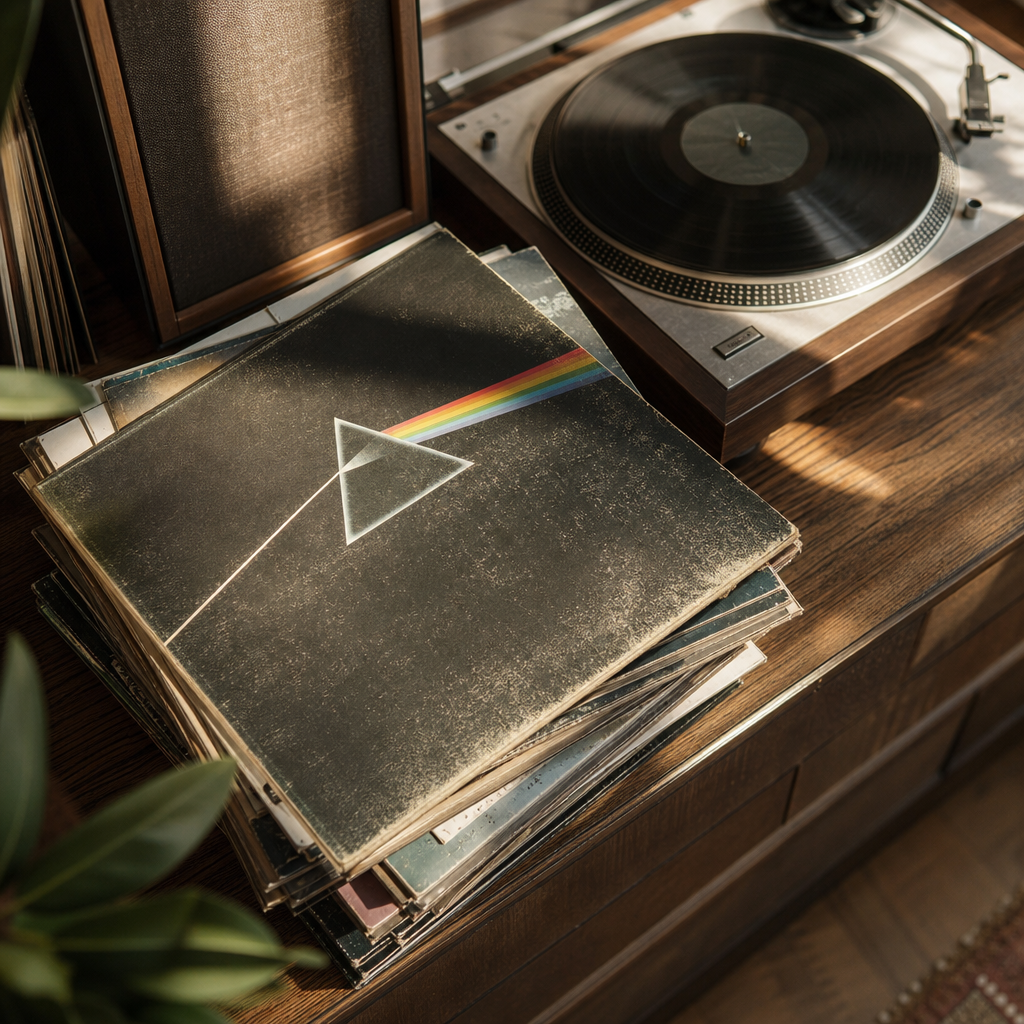
2The Dark Side of the Moon by Pink Floyd (1973)
The Dark Side of the Moon explores themes of time, madness, and human frailty through Roger Waters' lyrics and the band's atmospheric soundscapes, recorded over nine months at Abbey Road Studios. Tracks like "Money" with its iconic cash register sounds and "The Great Gig in the Sky" featuring Clare Torry's vocal performance made it a commercial juggernaut, spending 937 weeks on the Billboard charts.
Its notability lies in the pioneering use of synthesizers, tape loops, and quadrophonic sound, creating an immersive listening experience that defined progressive rock. The album's conceptual unity and sonic innovation set a new standard for what rock albums could achieve artistically and technically.
Unlike earlier Floyd works focused on space themes, this one grounds the psychedelia in personal and societal issues, distinguishing it from similar concept albums of the era. It remains a benchmark for production quality in rock music.
To fully appreciate it, play the original vinyl pressing or the 2011 remaster on high-quality headphones for the layered effects and seamless transitions between songs.
The album spent 937 weeks on the Billboard 200 chart, the longest run of any album in history.
3Rumours by Fleetwood Mac (1977)
Rumours captures the personal turmoil within Fleetwood Mac during its creation, with songs like "Go Your Own Way" and "Don't Stop" reflecting real band member relationships and breakups. Recorded in multiple studios including Record Plant in Sausalito, it features Stevie Nicks' ethereal vocals and Lindsey Buckingham's intricate guitar work across 11 tracks.
The album's memorable quality stems from its polished pop-rock sound combined with raw emotional honesty, winning the Grammy for Album of the Year and selling over 40 million copies worldwide. It turned personal drama into universal anthems that defined 1970s soft rock.
It differs from harder rock contemporaries by emphasizing melody and harmony over aggression, yet shares the era's studio experimentation seen in albums like those from the Eagles. Its commercial success bridged rock and pop audiences effectively.
Modern listeners find it on deluxe editions with outtakes, ideal for appreciating the vocal harmonies and rhythm section that made it a yacht rock staple.
4London Calling by The Clash (1979)
London Calling is a double album blending punk, reggae, rockabilly, and ska, recorded in London and New York with producer Guy Stevens. It features hits like the title track and "Clampdown," addressing political and social issues amid the band's evolution from pure punk roots.
Its worth including comes from the ambitious scope and genre fusion that expanded punk's boundaries, earning critical acclaim and influencing the post-punk movement. The cover art parodying Elvis Presley's debut added cultural commentary.
Compared to earlier Clash albums like The Clash, this one shows greater musical maturity and experimentation, moving beyond three-chord punk into sophisticated arrangements seen in similar works by The Jam.
Experience it through the 25th anniversary edition on vinyl for the full dynamic range and bonus tracks that highlight its creative process.
5Led Zeppelin IV by Led Zeppelin (1971)
Led Zeppelin IV, often called Four Symbols, includes the epic "Stairway to Heaven" and "Black Dog," recorded at Headley Grange in England using the Rolling Stones Mobile Studio. It marked the band's shift toward folk and acoustic elements alongside heavy riffs from Jimmy Page.
Notable for its mystical lyrics and masterful production, the album reached number one in multiple countries and has sold over 37 million copies. Its cover art with the hermit figure adds an enigmatic layer that fans still debate.
It stands apart from previous Zeppelin releases by incorporating more acoustic textures, similar to how contemporaries like The Who evolved their sound in the early 70s.
Stream the remastered version or seek the original LP for the powerful drum sound and guitar tones that defined hard rock.
6Who's Next by The Who (1971)
Who's Next emerged from abandoned Lifehouse project sessions at Olympic Studios, featuring anthems like "Baba O'Riley" and "Won't Get Fooled Again" with Pete Townshend's innovative synthesizer use. It showcases the band's raw power through Keith Moon's drumming and Roger Daltrey's vocals.
Memorable for its energetic performances and conceptual depth drawn from Townshend's spiritual themes, it peaked at number one in the UK and became a live staple. The album's gatefold sleeve with the band in front of a concrete block is iconic.
Unlike their rock opera Tommy, this is a straightforward rock record with studio polish, contrasting the more narrative-driven works of the period like those from Pink Floyd.
Listen on the deluxe edition to hear alternate takes that reveal the creative decisions behind the explosive sound.
7Born to Run by Bruce Springsteen (1975)
Born to Run tells stories of escape and ambition through tracks like the title song and "Thunder Road," recorded at 914 Sound Studios in New York with the E Street Band. It features Clarence Clemons' saxophone and Springsteen's vivid storytelling lyrics.
Its inclusion is justified by the cinematic scope and working-class anthems that propelled Springsteen to stardom, earning five Grammy nominations. The album's wall-of-sound production echoes Phil Spector influences.
It compares to other 70s rock epics by prioritizing narrative depth over pure energy, much like how Neil Young blended folk and rock in the same era.
Find it on the 30th anniversary edition for bonus material that deepens appreciation of its blue-collar themes.
8Electric Ladyland by The Jimi Hendrix Experience (1968)
Electric Ladyland is Jimi Hendrix's only double studio album, featuring "All Along the Watchtower" and the title track's experimental soundscapes recorded at Record Plant in New York. It showcases his guitar innovations and psychedelic explorations with guest musicians like Steve Winwood.
Notable for pushing rock boundaries with effects and studio techniques, it reached number one on the US charts despite controversy over the cover art. Hendrix's short career makes this a pinnacle of his genius.
It differs from his debut Are You Experienced by embracing longer jams and collaborations, akin to how other guitar heroes like Eric Clapton expanded in the late 60s.
Play the 50th anniversary remaster on vinyl to capture the full stereo separation and guitar wizardry.
9Exile on Main Street by The Rolling Stones (1972)
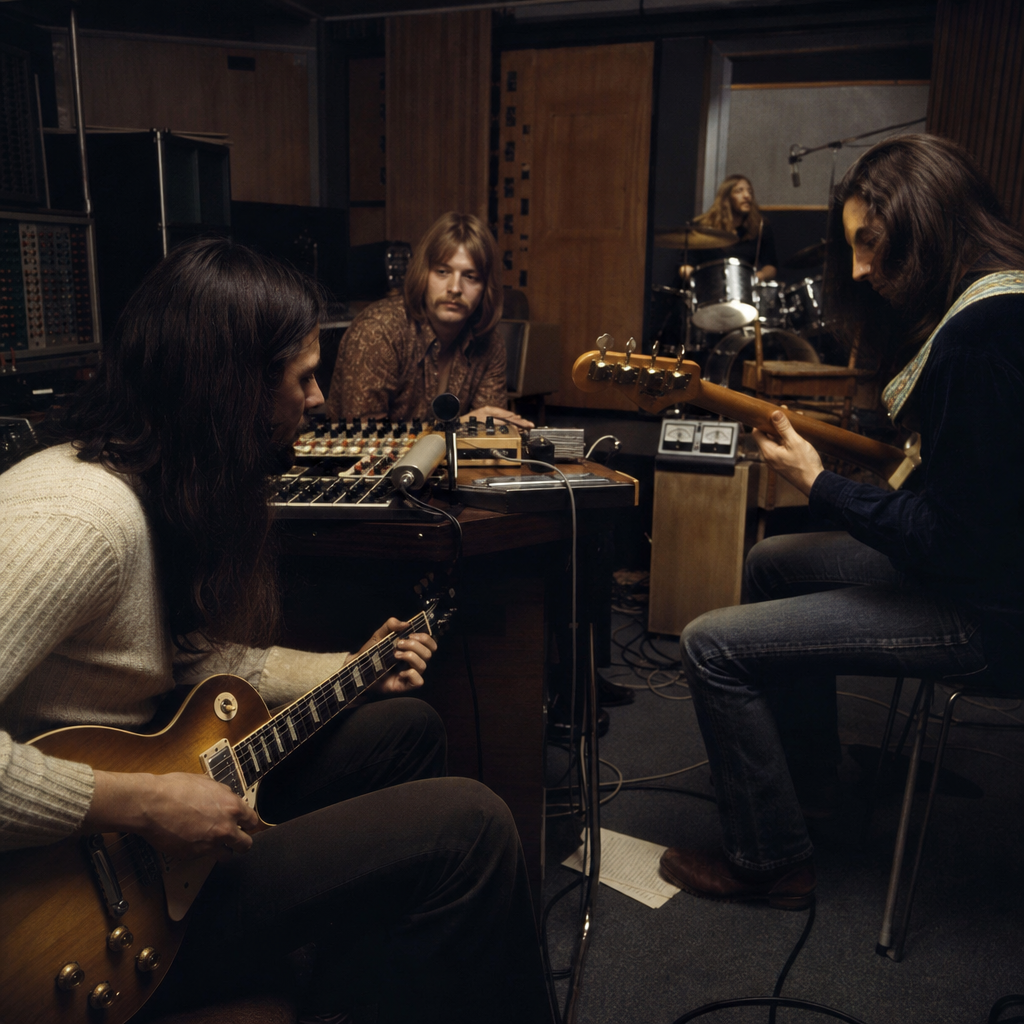
Exile on Main Street was recorded in a basement studio in France, capturing the Stones' raw, bluesy rock with tracks like "Tumbling Dice" and "Happy." It reflects their nomadic lifestyle and Keith Richards' guitar riffs amid personal excesses.
Worth including for its gritty authenticity and double-album sprawl that influenced roots rock, it charted highly and has been reissued multiple times. The loose, party-like sessions defined its character.
Compared to earlier Stones albums like Sticky Fingers, this feels more chaotic and soulful, sharing the era's experimental freedom with acts like The Clash.
Seek the 2010 remaster for improved clarity on the layered vocals and instrumentation.
10OK Computer by Radiohead (1997)
OK Computer critiques modern alienation through Thom Yorke's vocals and Jonny Greenwood's guitar textures on songs like "Paranoid Android" and "Karma Police." Recorded at various studios including St. Catherine's Court, it marked a shift from grunge to art rock.
Its notability comes from the innovative production and thematic depth, winning a Grammy and influencing the 2000s indie scene. The album's dystopian vibe resonated widely.
It stands out from Britpop contemporaries by embracing electronic elements, similar to how U2 evolved in the 80s with atmospheric sounds.
Experience the 2017 OKNOTOK reissue with additional tracks for deeper insight into its creation.
11The Joshua Tree by U2 (1987)
The Joshua Tree explores American landscapes and spirituality with hits like "With or Without You" and "I Still Haven't Found What I'm Looking For," recorded in Dublin and the US. Bono's lyrics and The Edge's delay-heavy guitar define its sound.
Memorable for its epic scope and commercial breakthrough, it topped charts globally and won two Grammys. The desert imagery on the cover ties into its thematic journey.
Unlike their earlier punk-leaning work, this embraces arena rock grandeur, comparable to Springsteen's anthemic style from the same decade.
Listen to the 30th anniversary edition for live versions and remixes that enhance its emotional impact.
12Nevermind by Nirvana (1991)
Nevermind brought grunge mainstream with "Smells Like Teen Spirit" and Kurt Cobain's raw vocals, recorded at Sound City Studios in Van Nuys. It features Dave Grohl's powerful drumming and Krist Novoselic's bass driving the punk-metal fusion.
Its worth lies in changing rock radio forever and selling over 30 million copies, earning induction into the Grammy Hall of Fame. The album cover's swimming baby became iconic.
It contrasts with hair metal of the era by prioritizing authenticity over polish, much like how Pearl Jam's Ten followed in its wake.
Play the 20th anniversary deluxe set for B-sides that show the album's raw origins.
13Appetite for Destruction by Guns N' Roses (1987)
Appetite for Destruction launched Guns N' Roses with sleaze rock anthems like "Welcome to the Jungle" and "Sweet Child o' Mine," recorded at Rumbo Recorders. Axl Rose's vocals and Slash's solos captured 80s excess perfectly.
Notable for its streetwise attitude and massive sales exceeding 30 million, it topped the Billboard 200 and defined hard rock for a generation. The controversial original cover added to its notoriety.
It differs from pop-metal peers by its gritty authenticity, echoing earlier hard rock like Led Zeppelin's raw energy.
Find the remastered version on streaming for the punchy mix that highlights the rhythm section.
14Back in Black by AC/DC (1980)
Back in Black honors late singer Bon Scott with Brian Johnson's debut, featuring "Hells Bells" and the title track recorded at Compass Point Studios in the Bahamas. Angus Young's riffs and the band's no-frills approach shine.
Its inclusion is due to being the second best-selling album ever with over 50 million copies sold, proving rock's enduring appeal post-tragedy. The all-black cover is instantly recognizable.
Compared to their earlier works, this feels more polished yet retains the high-voltage simplicity shared with contemporaries like Van Halen.
Listen on vinyl reissues for the thunderous drum sound that powers the tracks.
15Pet Sounds by The Beach Boys (1966)
Pet Sounds showcases Brian Wilson's production genius with orchestral arrangements on tracks like "God Only Knows" and "Wouldn't It Be Nice," recorded at Western Recorders in Hollywood. It blends pop and rock with innovative instrumentation.
Memorable for influencing the Beatles' Sgt. Pepper's and reaching number 2 on charts despite initial mixed sales, it has sold millions in reissues. The complex harmonies define its legacy.
It predates many entries here but shares the studio experimentation of later albums like those from Pink Floyd, standing as a foundational rock masterpiece.
Experience the 50th anniversary stereo mix on high-end audio systems to hear the layered details Wilson crafted.
Pet Sounds was recorded using over 40 session musicians and took months of studio time in 1965-1966.
Conclusion
These albums represent the pinnacle of rock creativity across decades. Listening to them reveals why the genre endures and evolves.
Start your journey with one that matches your mood and discover connections between them.
Frequently Asked Questions
What makes an album one of the best rock albums?
Criteria include innovation, cultural impact, sales figures, critical acclaim from sources like Rolling Stone, and lasting influence on other artists. Personal resonance also plays a role for fans.
How were these albums selected?
Selections draw from consensus across lists like Rolling Stone's 500 Greatest and uDiscoverMusic rankings, focusing on verified sales, awards, and historical significance without repeating artists.
Are there modern rock albums that could join this list?
Yes, future lists may include recent releases as they gain longevity, but classics like these have proven staying power through decades of cultural shifts.
Where can I buy or stream these albums?
They are widely available on major streaming services, vinyl reissues from official labels, and digital stores like iTunes or Amazon Music.
Why is vinyl popular for these albums?
Vinyl offers warmer sound and the original artwork experience, with many reissues including liner notes that enhance appreciation of the recording process.
Do these albums have live versions or documentaries?
Many do, such as concert films or behind-the-scenes docs on platforms like Netflix or YouTube, providing context on their creation and impact.
How do I start listening if new to rock?
Begin with accessible entries like Rumours or Born to Run, then explore deeper cuts; playlists on Spotify often group them by era or theme.
Have any been remastered recently?
Yes, several received 2020s remasters improving clarity, available on streaming and physical formats for optimal playback.


