
- 🥇 Best Overall: Someone Like You by Adele — a huge, cathartic heartbreak anthem that still feels painfully personal
- 💰 Best Value: Everybody Hurts by R.E.M. — the clearest comfort song here, with no emotional guesswork required
- Hurt by Johnny Cash — best for grief, regret, and late-night self-reflection
- Fix You by Coldplay — best for when you want sadness to turn into hope
- The Night We Met by Lord Huron — best for missing a person, a place, or a version of yourself
- Liability by Lorde — best for feeling too intense, too needy, or too much
- Nothing Compares 2 U by Sinéad O’Connor — best for devastating, full-body heartbreak
- Skinny Love by Bon Iver — best for quiet loneliness and indie-folk melancholy
- Motion Picture Soundtrack by Radiohead — best for numb, cinematic sadness
- I Know It’s Over by The Smiths — best for dramatic, brutally honest despair
Sad songs do not fix your life, but the right one can make the room feel less empty. When you are heartbroken, grieving, lonely, or just emotionally worn out, a great sad song gives shape to the feeling you cannot explain.
This list gives you 10 songs for different kinds of sadness: the ugly cry, the quiet stare out the window, the breakup spiral, the grief wave, and the fragile moment when you want to feel hopeful again.
1Someone Like You by Adele
Best for: anyone processing a breakup they are trying to accept but absolutely have not accepted yet.
“Someone Like You” is the sad-song heavyweight because it keeps the production almost brutally simple: piano, voice, and a lyric that sounds like a brave face cracking in real time. Released on Adele’s 2011 album 21, it works because it does not pretend heartbreak is neat. You hear pride, jealousy, tenderness, embarrassment, and resignation all fighting for space in the same performance.
The song reached No. 1 on the Billboard Hot 100 and helped turn 21 into one of the biggest albums of the century. Adele’s vocal control is the obvious headline, but the differentiator is restraint: no giant drum entrance, no glossy bridge, no unnecessary production trick. If you want proof of how culturally dominant this era became, Adele’s Grammy artist profile shows the awards weight behind the voice.
Play this when you need one clean emotional release, not background music. It is especially effective if you are stuck in the “I hope you’re happy, but also how dare you be happy” phase. The caveat: do not put it on repeat for an hour if you are already spiraling through your ex’s social media; use it as the cry, not the entire evening.
2Hurt by Johnny Cash
Best for: grief, regret, aging, loss, and the moments when sadness feels heavier than heartbreak.
Johnny Cash’s version of “Hurt” is technically a cover of the Nine Inch Nails song, but it became something else entirely. Released on American IV: The Man Comes Around in 2002, Cash’s recording sounds like a final inventory of pain. His voice is weathered, uneven, and human in a way that makes the song feel less performed than confessed.
The music video, directed by Mark Romanek, famously cuts between Cash at the House of Cash museum and archival footage from his life, turning the song into a meditation on legacy. The arrangement swaps industrial dread for acoustic starkness, piano, and a mournful swell that never feels manipulative. You can see where it sits in Cash’s late-career catalog on the official American IV album page.
This is not the song you choose for light sadness. Choose it when you are dealing with real loss, old mistakes, or the strange ache of realizing time has moved faster than you thought. Compared with “Someone Like You,” which is romantic and specific, “Hurt” is existential; it makes sadness feel ancient, physical, and shared.
3Fix You by Coldplay
Best for: people who want to be sad but still need a small light at the end of the tunnel.
“Fix You” is the song you reach for when you are not ready to be cheerful, but you do want to believe you might survive the day. Released in 2005 on Coldplay’s X&Y, it starts with organ-like keyboard chords and Chris Martin singing in a near-whisper. Then the song gradually builds until the famous “lights will guide you home” section turns private sadness into arena-sized release.
The song has become a staple at memorials, charity events, hospital montages, and televised tributes because its message is direct without being shallow. It does not say pain is easy. It says someone can sit beside you while it hurts. The track’s background, chart history, and release context are neatly summarized in the Fix You song history.
Use this when your sadness needs momentum. If you are making a playlist, put it after something devastating rather than before it; the lift at the end works best as a turn in the emotional story. The caveat is that “Fix You” can feel too earnest if you are in a cynical mood, so save it for the moment when comfort would not annoy you.
4The Night We Met by Lord Huron
Best for: missing someone so sharply that you wish you could rewind to the beginning.
“The Night We Met” is one of the most effective modern songs about regret because it is not loud about it. Released on Lord Huron’s 2015 album Strange Trails, the track has a ghostly, cinematic quality: echoing vocals, slow percussion, and a melody that feels like it is coming from another room. It is a song about wanting the past back while knowing the past is gone.
The track gained a massive second life after appearing in the Netflix series 13 Reasons Why, which pushed it into countless breakup playlists and late-night listening sessions. Its streaming numbers reflect that afterlife: it has passed well over a billion plays on major platforms, making it Lord Huron’s signature song for many listeners. The lyric “I had all and then most of you, some and now none of you” lands because it describes loss as a slow subtraction.
This is your best pick when the sadness is attached to memory rather than a single event. It works for old relationships, lost friendships, hometown nostalgia, and the strange grief of realizing a chapter of your life has closed. Pair it with a walk, a bus ride, or a dark room; it rewards stillness more than distraction.

5Liability by Lorde
Best for: anyone who feels like their emotions are too big for other people to handle.
“Liability” is small, direct, and quietly devastating. Released on Lorde’s 2017 album Melodrama, it strips away the sleek pop architecture of “Green Light” and leaves you with piano, voice, and a young person trying to make sense of rejection. The line “They say, ‘You’re a little much for me’” hits hard because it names a specific kind of sadness: not just being left, but feeling inherently exhausting.
What separates “Liability” from a standard breakup ballad is its self-awareness. Lorde is not only singing about someone who walked away; she is singing about the story she tells herself afterward. At roughly three minutes, it does not overstay its welcome, and that brevity is part of its power. It feels like a diary entry you were not supposed to hear.
Play this when you are tempted to turn other people’s limitations into proof that you are unlovable. The song validates that feeling without fully endorsing it, which is the trick. Compared with Adele’s grand heartbreak, Lorde gives you intimate embarrassment, social anxiety, and the lonely walk home after pretending you were fine.
6Everybody Hurts by R.E.M.
Best for: the moment when you need a plainspoken reminder to keep going.
“Everybody Hurts” is not subtle, and that is exactly why it works. Released on R.E.M.’s 1992 album Automatic for the People, it is built around slow, simple chords and Michael Stipe’s unusually direct vocal. The song speaks to someone in crisis without hiding behind metaphor: hold on, you are not alone, everyone hurts sometimes.
The track became one of R.E.M.’s most widely recognized songs and has been used repeatedly in public moments of mourning and support. Its string arrangement gives it a dignified weight, while Bill Berry’s deliberately simple drum pattern keeps it from becoming melodramatic. For album context, the official Automatic for the People album page places it among one of the band’s most acclaimed records.
This is the “best value” sad song because it gives you comfort immediately. You do not need to decode the lyrics or understand the backstory. If you are in serious distress, though, do not let any song be your only support; call someone you trust, contact a local crisis line, or in the U.S. call or text 988 for immediate help.
7Nothing Compares 2 U by Sinéad O’Connor
Best for: heartbreak that feels physical, consuming, and impossible to negotiate with.
“Nothing Compares 2 U” is one of the great vocal performances in pop history because Sinéad O’Connor sings it like she is trying not to fall apart and failing. Written by Prince and released by O’Connor in 1990, the song turns absence into the whole world. The production is spacious, the drums are restrained, and the vocal sits exposed enough for every crack of emotion to matter.
The music video, with its tight close-up of O’Connor’s face, became iconic because it removed almost every distraction. You are forced to stay with the feeling. The song reached No. 1 in multiple countries, including the U.S. and U.K., and its legacy is still enormous; the Nothing Compares 2 U chart history shows just how far it traveled.
Play this when you want a song that does not soften heartbreak into something pretty. It is beautiful, but it is not gentle. Compared with “The Night We Met,” which feels haunted and distant, “Nothing Compares 2 U” feels immediate, like grief pressing its hands against the glass.
8Skinny Love by Bon Iver
Best for: quiet, wintry sadness when you want something raw but not theatrical.
“Skinny Love” is fragile by design. Released on Bon Iver’s 2007 album For Emma, Forever Ago, it carries the mythology of Justin Vernon recording in a remote Wisconsin cabin, but the song endures because the feeling is so specific. The guitar is rough, the vocal is cracked and stacked with ghostly harmonies, and the lyric sounds like someone trying to hold together a relationship that has already thinned out.
The phrase “skinny love” has been interpreted as love without enough nourishment: affection that exists, but not strongly enough to sustain the people inside it. That is why the song works for more than romance. It fits friendships fading, family distance, and the ache of realizing effort alone cannot save a connection. Birdy’s 2011 piano cover introduced the song to another huge audience, but the original remains more ragged and private.
This is the track to play when you do not want the song to tell you what to feel. It leaves space. Put it on during a walk in cold weather, while cleaning after a bad week, or when you need sadness to feel handmade rather than polished. It is less of an anthem and more of a bruise.
9Motion Picture Soundtrack by Radiohead
Best for: numb, surreal sadness that feels too strange for ordinary breakup songs.
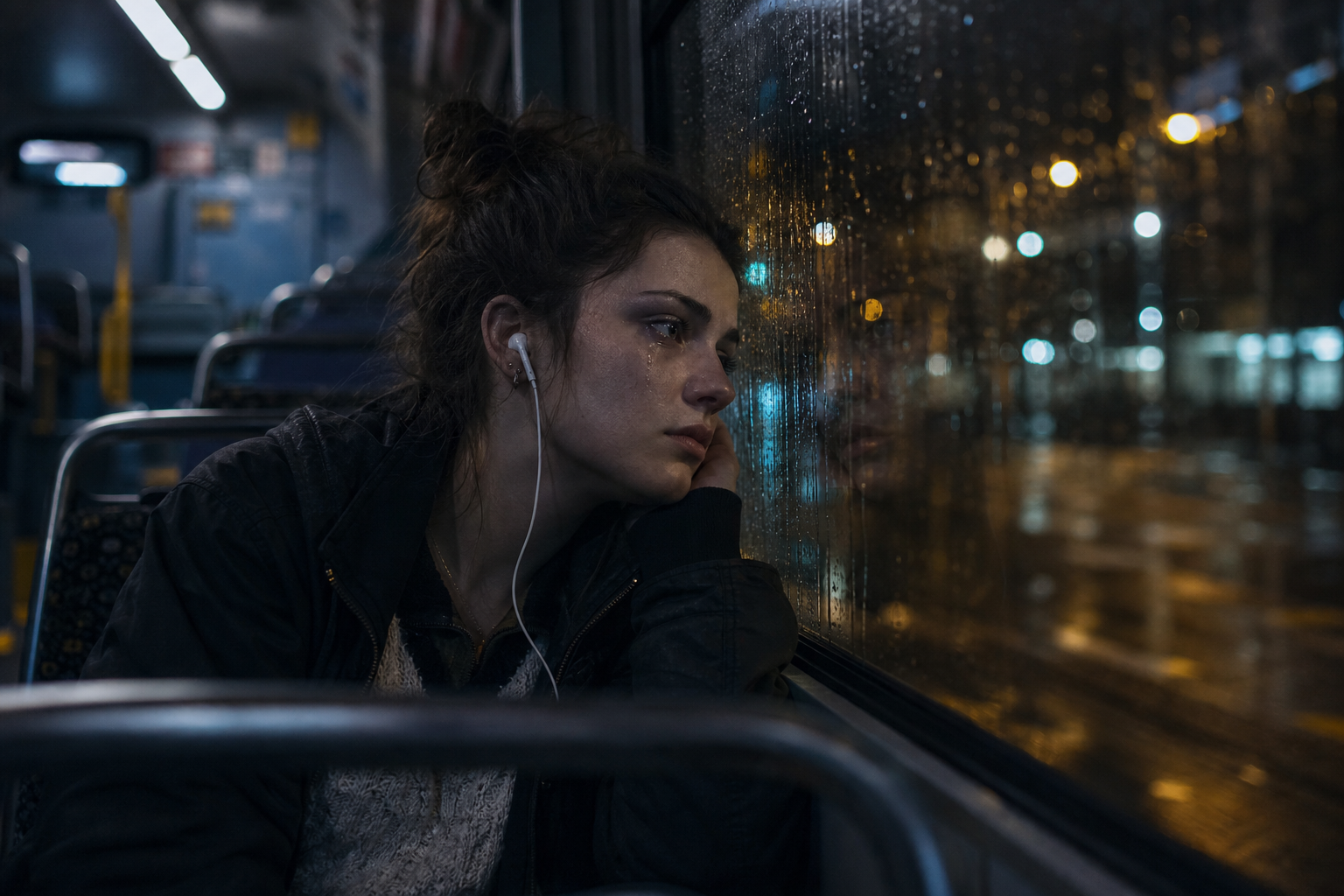
“Motion Picture Soundtrack” closes Radiohead’s 2000 album Kid A like an exhausted farewell. Built around a pump organ-style keyboard, harp-like textures, and Thom Yorke’s fragile vocal, it sounds less like a pop song than the final scene of a film where nobody explains what happened. The sadness here is not neat heartbreak; it is dissociation, longing, and the sense that reality has gone slightly out of focus.
The line “I will see you in the next life” gives the song its devastating center. It can read as romantic, spiritual, fatalistic, or cinematic depending on where you are emotionally when you hear it. That ambiguity is the differentiator. Many sad songs tell you exactly where to cry; this one creates an atmosphere and lets your own grief fill the room.
Choose this when you are too tired for a chorus that begs you to sing along. It is especially good for late-night headphones, long flights, and the quiet after a major life change. The caveat: if you need warmth, pick R.E.M. or Coldplay instead; Radiohead gives you beauty, but it does not always give you a hand to hold.
10I Know It’s Over by The Smiths
Best for: dramatic loneliness, rejection, and the kind of sadness that needs brutally quotable lyrics.
“I Know It’s Over” is six minutes of emotional collapse delivered with theatrical precision. Released on The Smiths’ 1986 album The Queen Is Dead, it begins with the unforgettable line “Oh mother, I can feel the soil falling over my head” and somehow gets more intense from there. Morrissey’s vocal is wounded, bitter, funny, and self-pitying, often all at once.
Johnny Marr’s guitar work is restrained rather than flashy, which gives the vocal room to spiral. The song stands out because it understands the embarrassing side of sadness: the grand statements, the private humiliations, the way loneliness can make you both poetic and ridiculous. It is not clean comfort. It is more like hearing someone say the ugliest version of what you were afraid to admit.
Use this when you want drama, not soothing. It pairs well with the end of a long night, a journal you may regret reading later, or a moment when you need to laugh darkly at your own despair. If “Everybody Hurts” is a friend putting an arm around you, “I Know It’s Over” is the friend who lets you be messy without pretending it is cute.
Sad music works because it lets you stop arguing with your feelings for a few minutes. The best song for you depends on the shape of the sadness: heartbreak, grief, numbness, loneliness, regret, or the need for one small thread of hope.
Start with one song that matches your mood, then move toward something gentler if you need to re-enter the day. A good cry can be useful; living inside the playlist forever is not the goal.
Frequently Asked Questions
Why do sad songs make you feel better?
Sad songs can help because they validate what you are feeling instead of forcing you to cheer up. They also create emotional distance: your pain becomes something you can hear, name, and move through.
What is the best sad song for a breakup?
“Someone Like You” by Adele is the strongest all-around breakup song because it captures longing, jealousy, dignity, and defeat in one performance. If the breakup feels more haunting than explosive, choose “The Night We Met” by Lord Huron instead.
What song should you play when you feel hopeless?
“Everybody Hurts” by R.E.M. is the safest pick on this list for a moment that feels heavy and isolating. If your sadness includes thoughts of self-harm, reach out to a trusted person immediately or contact emergency support such as 988 in the U.S.
Are sad songs bad for your mental health?
Not automatically. Sad music can be soothing and clarifying, but if you keep replaying songs to intensify a spiral, switch to something grounding and talk to someone.
What is the saddest song on this list?
“Hurt” by Johnny Cash is probably the heaviest because it carries grief, regret, age, and mortality at once. “Nothing Compares 2 U” is the most devastating if your sadness is specifically romantic heartbreak.
What sad song is best if you do not want to cry?
“Skinny Love” by Bon Iver is a good choice because it is melancholy without being overly direct. It lets you sit with the feeling quietly rather than pushing you toward a huge emotional release.
How should you build a sad playlist?
Start with the song that matches your strongest feeling, place the most devastating tracks in the middle, and end with something that gives you air. For example: “Nothing Compares 2 U,” then “Liability,” then “Fix You.”


