
- 🥇 Best Overall: Jimi Hendrix, “All Along the Watchtower” — the rare cover that made its songwriter rethink his own song
- 💰 Best Value: Soft Cell, “Tainted Love” — a cheap synth-pop remake that turned a Northern soul obscurity into a global staple
- 🎤 Biggest Vocal Flex: Whitney Houston, “I Will Always Love You” — a country ballad transformed into a blockbuster power-vocal landmark
- ✊ Most Culturally Defining: Aretha Franklin, “Respect” — a gender-flipped soul anthem that became bigger than the chart
- 🖤 Most Emotional Reinvention: Johnny Cash, “Hurt” — a late-career cover that reframed an industrial-rock confession as a farewell
- 😢 Best Tearjerker: Sinéad O’Connor, “Nothing Compares 2 U” — a Prince-written song made unforgettable by one face, one voice, one video
- 🕯️ Best Slow Burn: Jeff Buckley, “Hallelujah” — the version that pushed Leonard Cohen’s song into modern pop mythology
- 🎸 Best Rock Revival: Joan Jett & the Blackhearts, “I Love Rock ‘n Roll” — a rejected glam-rock song turned into a jukebox commandment
- 📺 Best MTV-Era Makeover: Cyndi Lauper, “Girls Just Want to Have Fun” — a male-written demo reborn as a feminist pop explosion
- 🍷 Best Reggae Crossover: UB40, “Red Red Wine” — Neil Diamond’s breakup song remade for patios, bars, and radio forever
A great cover does not just repeat a song; it argues with it, dresses it differently, and sometimes steals the spotlight completely. These are the versions that became the default in public memory, on radio, in movies, at karaoke nights, and on streaming playlists.
You may know the original artists, but in these cases the cover version changed the song’s commercial ceiling, cultural meaning, or emotional temperature. If you are building a playlist, settling a music trivia debate, or just want to hear reinvention at its highest level, start here.
1Jimi Hendrix, “All Along the Watchtower”
Best for: listeners who want the ultimate example of a cover becoming the definitive version.
Bob Dylan wrote and recorded “All Along the Watchtower” for his 1967 album John Wesley Harding, but Jimi Hendrix turned it into something larger, stranger, and more cinematic in 1968. Dylan’s original is lean, acoustic, and ominous; Hendrix’s version sounds like lightning trapped in a studio, with guitar lines that seem to answer the lyrics’ apocalyptic riddles.
The Hendrix recording appeared on Electric Ladyland and reached No. 20 on the Billboard Hot 100, modest by today’s blockbuster standards but massive in long-term influence. Its layered guitars, churning bass, and storm-warning production made the track a staple of classic-rock radio, and the song’s tangled history is now almost impossible to discuss without naming Hendrix first.
The key differentiator is authority. Hendrix did not simply add distortion; he found a new architecture inside Dylan’s lyrics, turning a folk parable into a widescreen rock prophecy. If you want to understand why some covers eclipse their sources, compare both versions back to back: Dylan gives you the map, Hendrix makes the ground shake under your feet.
2Whitney Houston, “I Will Always Love You”
Best for: anyone who wants a masterclass in how vocal performance can transform a song’s destiny.
Dolly Parton wrote “I Will Always Love You” in 1973 as a graceful goodbye to Porter Wagoner, her mentor and television partner. Her 1974 country version is tender, restrained, and conversational, reaching No. 1 on Billboard’s Hot Country Songs chart. Then Whitney Houston recorded it for The Bodyguard soundtrack in 1992 and turned a private farewell into one of the most recognizable pop ballads ever released.
Houston’s version spent 14 weeks at No. 1 on the Billboard Hot 100 and helped The Bodyguard become one of the best-selling soundtracks in history, with worldwide sales commonly reported at more than 40 million copies. The arrangement’s a cappella opening was a bold commercial risk; it made radio listeners stop instantly before the drums, key change, and vocal fireworks arrived. Dolly Parton’s own history with the song is outlined in Dolly Parton’s official account of “I Will Always Love You”.
The caveat is that Parton’s original is not lesser; it is just playing a different emotional sport. Dolly sings it like a person leaving a room with dignity. Whitney sings it like the memory of that room has become an IMAX experience. For karaoke, attempt this only if you understand the final chorus is not a note; it is a mountain.
3Johnny Cash, “Hurt”
Best for: listeners drawn to covers that completely change the emotional meaning of the original.
Nine Inch Nails released “Hurt” in 1994 on The Downward Spiral, where Trent Reznor framed it as a bleak industrial-rock confession from the edge of self-destruction. Johnny Cash covered it in 2002 for American IV: The Man Comes Around, and the song suddenly sounded like a final inventory taken by a man surrounded by memories, losses, faith, and failing health.
The music video, directed by Mark Romanek, is inseparable from the cover’s impact. It cuts between the aging Cash, footage from his younger years, and images of the House of Cash museum in disrepair. June Carter Cash appears in the video; she died months later, and Johnny followed later that same year. That context made the performance feel less like a cover and more like a living eulogy.
Cash’s version did not need a No. 1 pop chart run to become the better-known cultural reference. It won a Grammy for Best Short Form Music Video and regularly appears on lists of the greatest music videos ever made. The lesson for you as a listener is simple: a cover can win by timing. Reznor wrote the wound; Cash made the scar visible.
4Aretha Franklin, “Respect”
Best for: fans of soul, civil-rights history, and songs that changed meaning through performance.
Otis Redding wrote and recorded “Respect” in 1965 as a driving soul number about a man asking for recognition when he comes home. Aretha Franklin recorded it in 1967 and changed the center of gravity. Her version was faster, sharper, brighter, and more declarative, turning a domestic request into a public demand.
Franklin’s “Respect” hit No. 1 on the Billboard Hot 100 and won two Grammys in 1968, including Best Rhythm & Blues Recording. The added “R-E-S-P-E-C-T” spelling hook, the “sock it to me” backing vocals, and the muscular Muscle Shoals/New York studio energy made it instantly quotable. You can see the scale of her recognition in the Recording Academy’s Aretha Franklin profile.
What makes this cover tower over the original is not just popularity; it is ownership. Redding reportedly joked that Franklin had taken the song from him, and history largely agreed. If you are comparing the two, listen for perspective: Otis asks, Aretha insists. That difference turned a good soul record into a feminist and civil-rights-era anthem.
5Soft Cell, “Tainted Love”
Best for: synth-pop fans and anyone who loves when a forgotten single gets a second life.
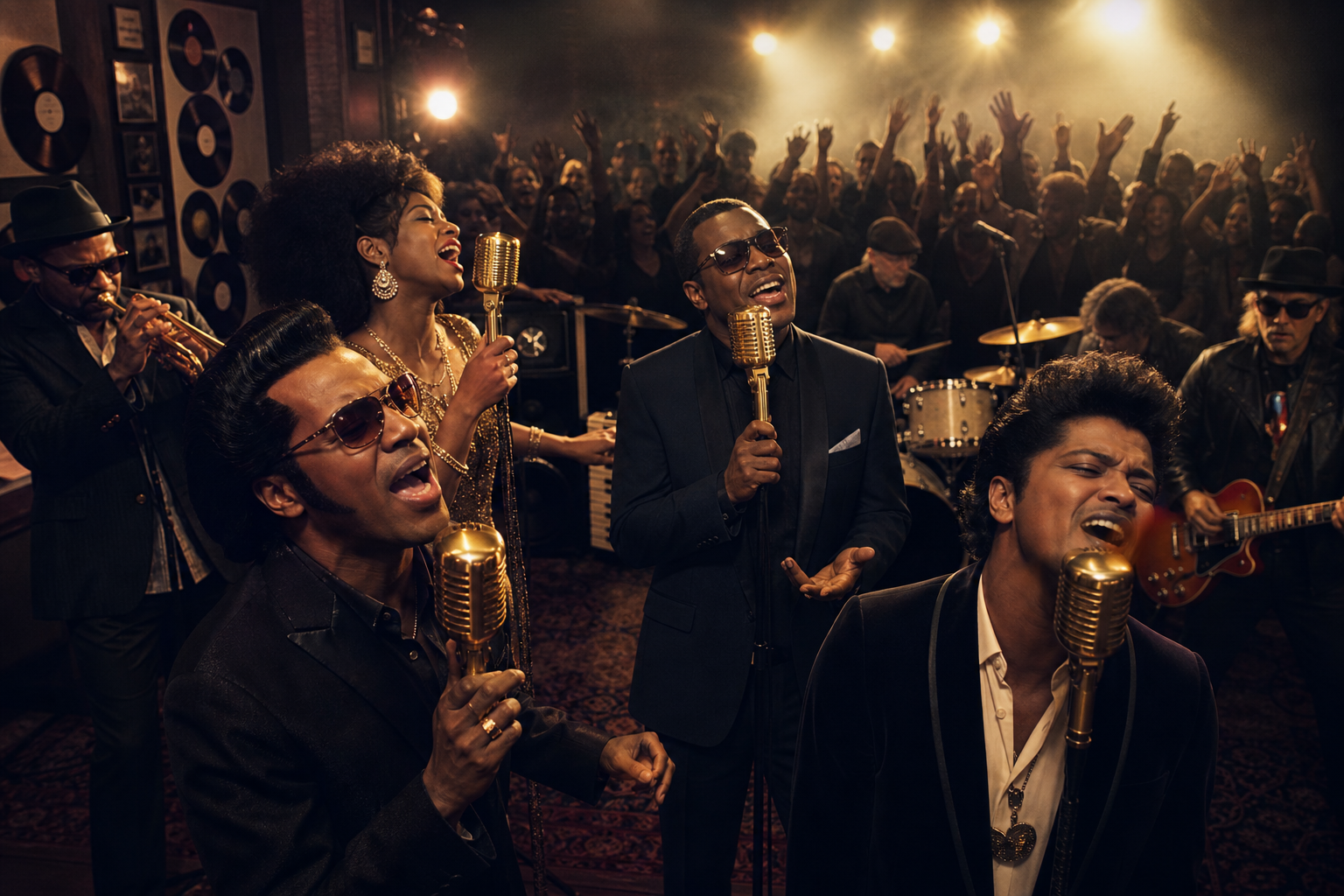
Gloria Jones first recorded “Tainted Love” in 1964, and for years it lived mostly as a prized Northern soul record among British club DJs and collectors. Soft Cell’s 1981 cover stripped the song down to a cold, pulsing synth line, Marc Almond’s wounded vocal, and a claustrophobic club atmosphere. The result sounded cheap in the best possible way: minimal, memorable, and impossible to confuse with anything else on the radio.
The Soft Cell version reached No. 1 in the United Kingdom and climbed to No. 8 on the Billboard Hot 100 in the United States. It also became famous for its extended 12-inch medley with “Where Did Our Love Go,” a smart dance-floor move that helped DJs stretch the drama. If you bought the single in the early 1980s, it was a low-cost piece of vinyl; today, clean original pressings can cost far more than a 99-cent digital download.
The original has swing and heat, while the cover has anxiety and neon. That is why the cover won the long game. Soft Cell recognized that the lyric “Sometimes I feel I’ve got to run away” did not need a big band behind it; it needed a machine heartbeat and a singer who sounded trapped inside his own nightlife.
6Sinéad O’Connor, “Nothing Compares 2 U”
Best for: listeners who believe one video performance can permanently define a song.
Prince wrote “Nothing Compares 2 U,” and the song was first released by The Family, a Prince-associated group, in 1985. That original version is elegant Minneapolis pop-soul, but it did not become a mass cultural event. Sinéad O’Connor’s 1990 recording did, thanks to a stark arrangement and a vocal that made grief feel uncomfortably close.
O’Connor’s version reached No. 1 in the United States, the United Kingdom, Australia, Canada, and several European countries. The video, built mostly around a tight close-up of her face, became one of the defining clips of the MTV era. Two tears roll down her cheeks near the end, and whether you know the backstory or not, the moment feels brutally unscripted.
The cover’s advantage is subtraction. O’Connor removed anything that might distract from the ache: no flashy dance routine, no busy band shots, no romantic melodrama. If you are making a breakup playlist, this is not background music. It is the track you play when you are ready to stop pretending the room is not empty.
7Jeff Buckley, “Hallelujah”
Best for: patient listeners who love songs that build their reputation slowly over decades.
Leonard Cohen released “Hallelujah” in 1984 on Various Positions, but the song did not immediately become the universal hymn it is today. John Cale’s 1991 version helped reshape it, and Jeff Buckley’s 1994 recording on Grace gave it the fragile, sensual, almost sacred aura that many modern listeners now associate with the song.
Buckley’s version was not a huge radio smash during his lifetime. Its power grew through word of mouth, television placements, memorial use after Buckley’s 1997 death, and later digital-era discovery. By the 2000s, “Hallelujah” had become a talent-show, soundtrack, wedding, funeral, and holiday-season fixture, a strange fate for a song full of biblical imagery, erotic tension, and spiritual ambiguity. The BBC’s history of “Hallelujah” captures why the song became so elastic.
The caveat: Cohen’s original deserves deep respect, and Cale’s arrangement is the bridge many people forget. Still, Buckley’s vocal is the version that made a generation hear the song as intimate confession rather than literary meditation. Play it late at night, not casually in a noisy kitchen, and you will understand why the cover became the reference point.
8Joan Jett & the Blackhearts, “I Love Rock ‘n Roll”
Best for: anyone who wants a cover that feels like a mission statement, not a remake.
The Arrows released “I Love Rock ‘n Roll” in 1975, and Joan Jett first noticed it while touring in the United Kingdom with the Runaways. The original has glam-rock charm, but Jett heard something tougher inside it. Her 1981 version with the Blackhearts turned the song into a stomping, leather-jacketed declaration of purpose.
Released on the album I Love Rock ‘n Roll, the single spent seven weeks at No. 1 on the Billboard Hot 100 in 1982. The video, with Jett in black hair, black eyeliner, and barroom command mode, became a crucial early-MTV image. The riff is simple enough for a beginner guitarist to chase and big enough to fill an arena, which is exactly the balance a rock anthem needs.
Jett’s version beats the original because it sounds less like a song about loving rock and more like proof of the claim. There is no over-singing, no needless soloing, no apology. If you are programming a party playlist, this remains one of the safest first-hour rock picks: familiar, loud, and built for people who only need the chorus once before joining in.

9Cyndi Lauper, “Girls Just Want to Have Fun”
Best for: pop fans interested in how arrangement and perspective can completely rewrite a song.
Robert Hazard wrote and recorded the original demo of “Girls Just Want to Have Fun” in 1979 from a male point of view. Cyndi Lauper, producer Rick Chertoff, and the studio team reshaped it into a bright, rebellious, female-centered pop single for her 1983 debut album She’s So Unusual. That shift changed everything.
Lauper’s version reached No. 2 on the Billboard Hot 100 and became one of the signature videos of early MTV. The clip included Lauper’s real mother, Catrine, and wrestler Captain Lou Albano, mixing family sitcom chaos with downtown style. The production is full of springy synths, handclaps, and a chorus that feels engineered for bedroom dancing, school dances, mall speakers, and every retro night that followed.
The cover became bigger because Lauper made fun sound political without making the record heavy. It was not just about partying; it was about autonomy, clothes, color, noise, and refusing to be managed. The original is an interesting artifact, but Lauper’s version is the one that turned a phrase into a generational slogan.
10UB40, “Red Red Wine”
Best for: listeners who love relaxed crossover hits with deceptively sad lyrics.
Neil Diamond wrote and released “Red Red Wine” in 1967, singing it as a melancholy pop ballad about trying to drink away heartbreak. UB40 covered it in 1983 in a reggae style, reportedly influenced more by Tony Tribe’s earlier reggae version than by Diamond’s original. That sunny groove changed the song’s commercial life completely.
UB40’s recording hit No. 1 in the United Kingdom in 1983, then topped the Billboard Hot 100 in the United States in 1988 after renewed radio attention and the success of the longer version with Astro’s toasted vocal section. The song became a bar-band standard, a beach-party staple, and one of those tracks people recognize within two seconds of the keyboard intro. The chart history of “Red Red Wine” shows how unusually long its road to U.S. dominance was.
The trick is contrast. The lyric is sad, but the rhythm lets people sway before they realize how wounded the narrator is. Diamond’s version is for sitting alone with the bottle; UB40’s is for hearing the same pain through speakers on a warm night, surrounded by people who all know the chorus.
The best cover songs do not erase the originals; they reveal how flexible strong songwriting can be. Hendrix found thunder in Dylan, Houston found stadium-sized devotion in Parton, and Aretha found a movement inside Otis Redding’s groove.
If you want to test a cover’s greatness, ask one question: when most people hear the title, whose voice plays in their head first? For these ten songs, the answer is usually the cover artist, and that is the rarest kind of musical takeover.
Frequently Asked Questions
What makes a cover song more popular than the original?
A cover becomes more popular when it outperforms the original in chart success, radio play, streaming familiarity, cultural impact, or public memory. Sometimes the original remains respected, but the cover becomes the version casual listeners recognize first.
Are these cover versions always better than the originals?
Not always. “Better” is subjective, but these covers clearly expanded the songs’ audiences or changed how people understood them. In several cases, the original is quieter or more niche, while the cover is more dramatic, commercial, or culturally timed.
Did the original songwriters benefit from famous covers?
Usually, yes, because songwriters earn publishing royalties when covers are sold, streamed, broadcast, or licensed. Dolly Parton, for example, famously benefited from Whitney Houston’s massive recording of “I Will Always Love You.”
Why are so many famous covers from the 1960s through 1990s?
Those decades were built around radio, physical singles, MTV, and album culture, which could push one definitive recording into mass consciousness. A powerful cover could dominate Top 40 radio, sell millions of copies, and then live for decades through movies, commercials, and classic-hits formats.
Is “Hallelujah” really better known through Jeff Buckley than Leonard Cohen?
For many modern listeners, yes, though Leonard Cohen’s authorship is central to the song’s prestige. Buckley’s version helped define the song’s intimate, haunting modern identity, while Cohen’s original remains the foundation.
Which cover on this list changed the original meaning the most?
Aretha Franklin’s “Respect” is the clearest example. Otis Redding’s original was a man’s plea at home, while Franklin’s version became a demand for dignity, gender equality, and social recognition.
What is the best way to compare a cover with its original?
Listen to the original first, then the cover, and focus on tempo, point of view, vocal tone, arrangement, and historical context. The most successful covers usually make one or two bold decisions rather than changing everything at random.


