
- 🥇 Best Overall: Let's Make a Deal's Live Goat Zonk — the purest blend of chaos, comedy, and zero practical value
- 💰 Best Value: The Gong Show's $516.32 Winner Check — at least the joke prize was actual cash
- 📺 Blankety Blank's Chequebook and Pen — famous, flimsy, and hilariously underwhelming
- 🫖 Countdown's Teapot — beloved by fans, but brutally small for elite brainwork
- 🚤 The Price Is Right's Taxable Boat — exciting on camera, expensive in real life
- 🚙 Survivor's Pontiac Aztek Car-Curse Ride — an infamous vehicle tied to an even more infamous curse
- 🎯 Bullseye's Landlocked Speedboat — the classic prize nobody from the Midlands could easily use
- 🐶 Wheel of Fortune's Ceramic Dalmatian — the shopping-era symbol of fake luxury
- 🧽 Jeopardy!'s Turtle Wax Consolation Haul — quiz brilliance traded for sponsor clutter
- 🗑️ 3-2-1's Dusty Bin — a mascot-shaped reminder that you decoded the clue badly
Game shows sell the fantasy that one lucky answer can change your life, but not every prize is a convertible, a dream vacation, or a life-altering jackpot. Sometimes victory means a farm animal, a novelty pen, a tax bill, or a boat you have nowhere to store.
The worst game show prizes are not always the cheapest. The true disasters are the prizes that looked exciting under studio lights but became impractical, embarrassing, taxable, or just plain insulting once the applause faded.
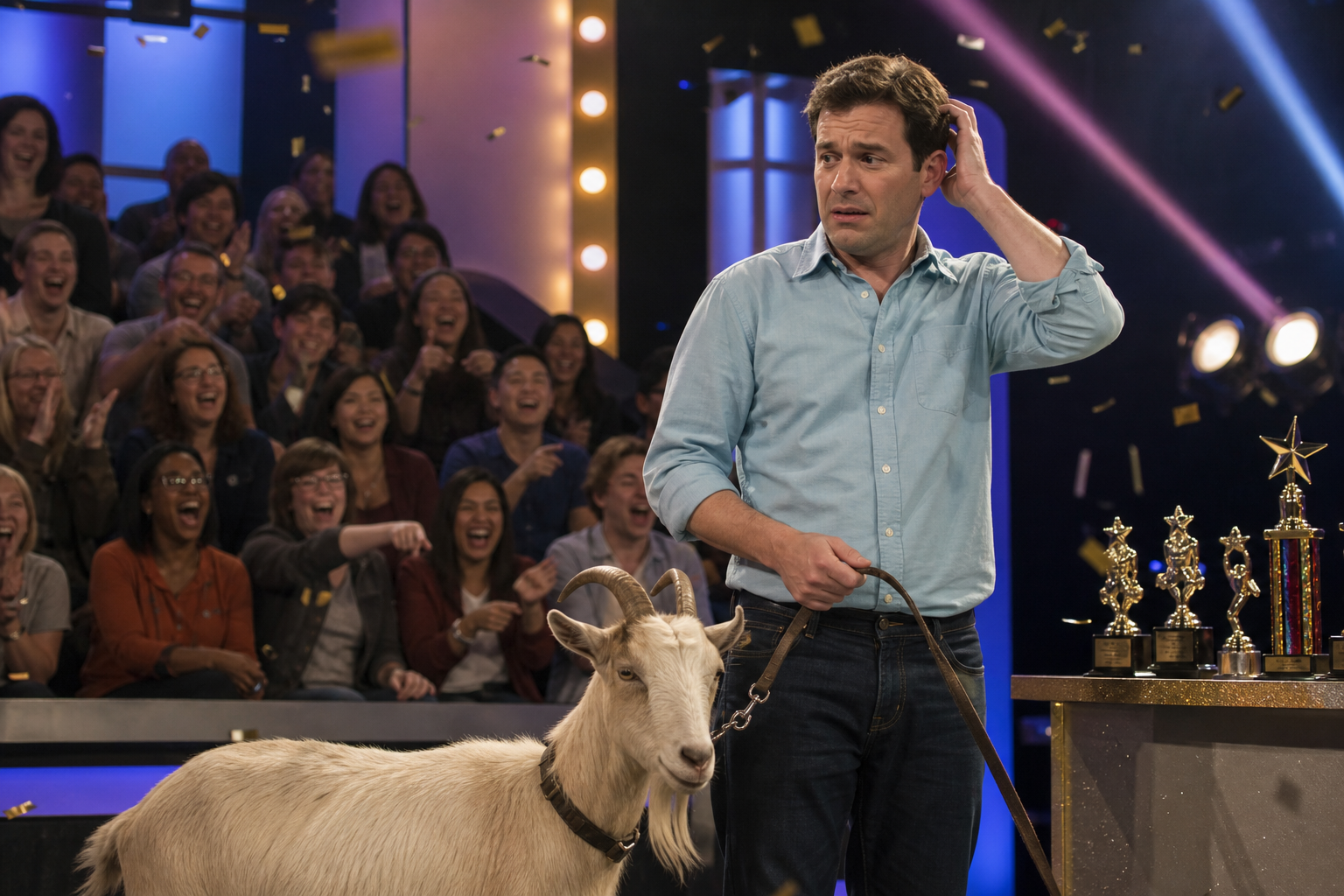
1Let's Make a Deal's Live Goat Zonk
Best for: anyone who wants proof that game show fame can arrive on four legs and chew the scenery.
A live goat is the ultimate bad prize because it is not merely useless to most contestants; it is actively a problem. On the official Let's Make a Deal show page, the format still revolves around traders choosing mystery doors, boxes, and curtains, and the danger has always been the Zonk. A Zonk is the booby prize: funny for the audience, miserable for the contestant, and often designed to mock the dream of winning big.
Monty Hall's original version made Zonks a core part of the show's identity, and live animals became some of the most memorable reveals. Goats, donkeys, pigs, and other barnyard punchlines gave the show a carnival energy that normal prize showcases could not match. The joke worked because a goat is not a vacation, not a car, and not even an easy prop to take home if you live in an apartment, condo, dorm, or subdivision with strict animal rules.
The caveat is that contestants usually did not have to literally keep a farm animal, and modern productions handle animal welfare and substitutions much more carefully. Still, judged as a prize, the live goat Zonk is beautifully awful: it has maintenance costs, food costs, legal complications, and resale awkwardness. Compared with a bad appliance or ugly furniture set, the goat wins this list because it turns losing into a logistical crisis.
2The Gong Show's $516.32 Winner Check
Best for: comedy fans who appreciate a prize that was intentionally ridiculous but still technically better than nothing.
The Gong Show was never trying to be a polished quiz show with a dignified prize ladder. It was a televised talent circus where amateur acts survived celebrity judges, avoided the gong, and competed for a famously strange top prize: $516.32. According to The Gong Show's broadcast history, the Chuck Barris-created series became known for oddball performers, chaotic judging, and a reward that felt like a punchline before the winner even received it.
That amount was part of the joke. In an era when other shows dangled cars, trips, appliances, and five-figure jackpots, The Gong Show gave its winner a check that looked like someone had emptied a petty-cash drawer and added coins for texture. Adjusted for inflation, it is not completely worthless, but it was still tiny compared with the humiliation risk of performing badly on national television.
As bad prizes go, this one deserves a little respect because it was honest. Nobody watching The Gong Show expected a Mediterranean cruise or a Cadillac. The problem is the winner had already done the hard part: rehearsing an act, performing live, and beating a field of eccentrics. If you conquered that particular madhouse, $516.32 felt less like a reward and more like the producers laughing with you, at you, and all the way to commercial break.
3Blankety Blank's Chequebook and Pen
Best for: British TV nostalgists who love a prize so cheap it became more famous than many jackpots.
Blankety Blank's chequebook and pen is one of the great anti-prizes in television history. The BBC panel game, hosted over the years by Terry Wogan, Les Dawson, Lily Savage, and others, leaned into camp, innuendo, and celebrity silliness. Its most notorious reward was not a serious banking tool or luxury writing set; it was a branded chequebook and pen presented with mock grandeur.
What made it stand out was the deliberate mismatch between presentation and value. Game shows usually exaggerate prizes to make them seem more glamorous, but Blankety Blank exaggerated a cheap object until its cheapness became the joke. Contestants might also win modest home goods, but the chequebook and pen became the trophy viewers remembered because it captured the show's entire personality: cheerful, tacky, and proudly low-budget.
In fairness, this prize has aged into a cult object. A surviving Blankety Blank chequebook and pen can be more interesting to a collector than a generic toaster from the same period. But that is nostalgia doing the heavy lifting. If you walked into a studio hoping for life-changing winnings and walked out with novelty stationery, you had every right to wonder whether the real blank was in the prize budget.
4Countdown's Teapot
Best for: elite word-game players who value bragging rights more than cash, comfort, or resale value.
Countdown is one of Britain's great brainy institutions, and its prize is famously modest: the Countdown teapot. The show asks contestants to solve letters rounds, numbers rounds, and the final Conundrum under intense time pressure. On Channel 4's official Countdown page, the format looks clean and civilized, but the mental speed required is genuinely impressive.
That is why the teapot feels so hilariously inadequate. Contestants may demonstrate a tournament Scrabble-level vocabulary, calculate complex arithmetic in seconds, and maintain composure in a silent studio while the clock music does psychological damage. Their reward is a teapot. Not a scholarship, not a cash bonus, not even a premium kitchen suite: a small ceramic emblem of intellectual victory.
The teapot is not worthless, because its cultural value is real. For Countdown fans, it is a badge of honor and a conversation piece that says you survived one of television's purest tests of mental agility. As a practical prize, however, it is brutal. You can buy a decent teapot for under £30 on the high street, which means the show's real prize is prestige. That is lovely, but prestige does not pay for the train home.
5The Price Is Right's Taxable Boat
Best for: viewers who think every flashy prize is automatically a financial win.
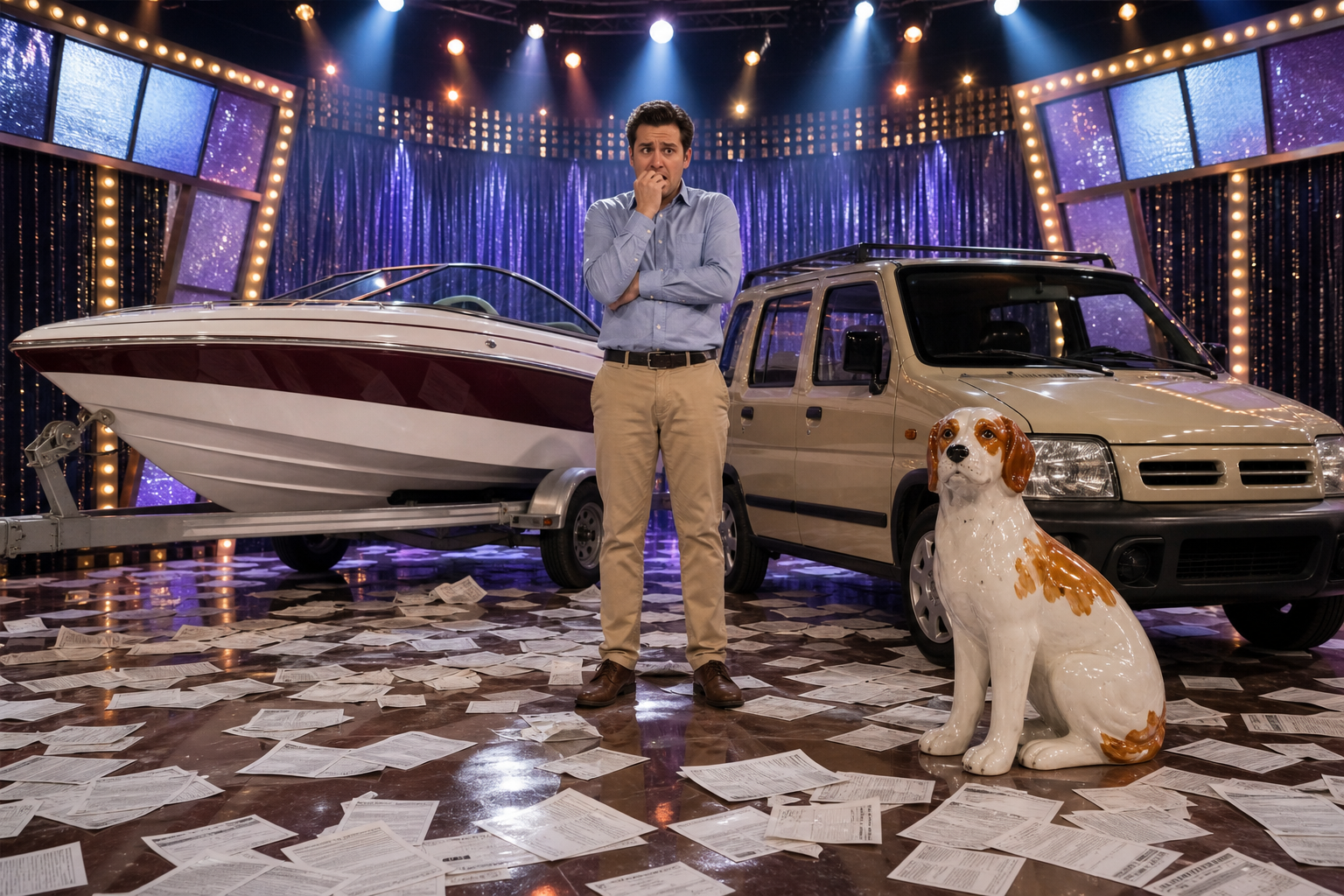
A boat looks spectacular on The Price Is Right. It sits under perfect lighting, surrounded by models, applause, and the fantasy of weekends on the water. The trouble starts after the showcase, because prizes are generally taxable income in the United States, and the IRS is very clear that prizes and awards are taxable income. That means a contestant who wins a $25,000 boat may owe thousands in federal taxes before accounting for state taxes, registration, insurance, maintenance, trailer storage, fuel, and marina fees.
Boats are among the worst big-ticket prizes because they combine high declared value with high ongoing cost. A modest new runabout can easily list between $20,000 and $60,000, and storage alone can run hundreds per month in many metro areas. Unlike cash, a boat also has a narrow resale market. If you live far from usable water, lack a tow vehicle, or rent an apartment, your prize can become a depreciating object you are desperate to unload.
The smart move is to ask the production company about cash alternatives, tax withholding, delivery rules, and whether you can decline individual prizes. Some contestants do exactly that when the math turns ugly. Compared with a goat, a boat sounds glamorous, but both have the same core defect: the show gets applause, and you get responsibility.
6Survivor's Pontiac Aztek Car-Curse Ride
Best for: reality TV fans who know that winning the reward challenge can make you a bigger target.
Survivor has given away vehicles as reward-challenge prizes, and the most infamous example is tied to the early-2000s Pontiac Aztek era. The Aztek already had a rough public reputation because of its polarizing design, bulky profile, and awkward crossover identity. On Survivor, the problem became even more theatrical: car winners were repeatedly voted out, creating what fans still call the car curse.
The curse is not supernatural, but the social mechanics make sense. A contestant who wins a vehicle looks fortunate, comfortable, and potentially less deserving of the million-dollar final prize. The Aztek also carried baggage outside the game. The Pontiac Aztek model history shows a vehicle launched for the 2001 model year and discontinued after 2005, which tells you how short its market runway was.
To be fair, a car is normally a good prize, and some Survivor vehicles were legitimately useful. The Aztek makes the list because it combined bad optics, tax exposure, public mockery, and strategic danger. On a normal game show, you worry about the insurance quote. On Survivor, you also worry that your tribe now sees you as the person who already got paid.
7Bullseye's Landlocked Speedboat
Best for: anyone who enjoys the uniquely British pain of winning a luxury item you cannot sensibly use.
Bullseye, the darts-and-quiz show hosted by Jim Bowen, is forever associated with the speedboat as a star prize. The setup was simple and cruelly funny: ordinary contestants from anywhere in Britain could end up playing for a gleaming boat, even if they lived nowhere near the coast, had no mooring, no towing setup, and no realistic plan to use it. The phrase Bullseye speedboat became shorthand for an impractical prize dressed up as a dream.
The numbers are not kind. Even a small speedboat needs insurance, licensing or local compliance, maintenance, a trailer, secure storage, and transport. If you are based in Birmingham, Leicester, or another inland area, the prize may cost money before it ever touches water. In the 1980s, a new speedboat could easily represent several thousand pounds of headline value, but headline value is not the same as usable value.
The best comparison is a timeshare pitch: the glossy brochure shows freedom, but the fine print shows annual obligations. Many contestants would have been better served by cash, a compact car, or a suite of appliances. The speedboat remains iconic because it was aspirational television at its most tone-deaf: a prize that looked fantastic to viewers and deeply inconvenient to the people who had to get it home.
8Wheel of Fortune's Ceramic Dalmatian
Best for: game show historians who remember when contestants shopped instead of simply banking cash.
Before Wheel of Fortune became the streamlined cash-and-trips machine most viewers know today, it had a shopping format. Contestants used their round winnings to buy prizes from a staged showroom, choosing furniture, jewelry, electronics, art, and odd decorative objects while trying to spend down their balance. The ceramic Dalmatian became the mascot of that era: not always literally the worst object on offer, but the perfect symbol of showroom filler pretending to be luxury.
The badness came from the forced-spending structure. If you had $1,200 left and the board offered a $1,100 ceramic dog, a bar cart, or a questionable wall sculpture, you were not making a dream purchase; you were managing fake retail inventory on television. The show created the illusion of abundance, but contestants often had to select items they would never buy with real money.
There is charm in the old format, especially for viewers who love shag carpeting, brass accents, and 1980s catalog energy. But a ceramic Dalmatian is the opposite of a flexible prize. It is fragile, taste-specific, hard to resell, and likely to become the object your family jokes about for decades. Cash does not clash with your sofa. A life-size ceramic dog absolutely can.
9Jeopardy!'s Turtle Wax Consolation Haul
Best for: trivia purists who want to see how far consolation prizes have come.
Jeopardy! is the gold standard of quiz credibility, which makes its older consolation-prize culture feel especially jarring. Today, second and third place receive fixed cash amounts, and Jeopardy explains current winner logistics in practical terms. In earlier eras of American game shows, however, non-winning contestants often left with sponsor merchandise, home games, luggage, cleaning products, or small branded packages that became shorthand for televised defeat.
Turtle Wax is the classic example people invoke because it sounds so hilariously unequal to the effort. Imagine passing the contestant test, paying attention to months of preparation, mastering buzzer timing, and standing a few feet from one of the most intimidating clue boards in television. Then you lose Final Jeopardy and receive products better suited to detailing a car in your driveway than rewarding intellectual performance.
The modern cash consolation system is far fairer, especially because travel to Los Angeles, hotels, wardrobe, and unpaid time off can be expensive. That context is why old merchandise consolation prizes age so badly. A bottle of wax may be useful, but usefulness is not the same as dignity. For a show built on knowledge, a low-value sponsor haul felt like the wrong answer in the form of a gift bag.
103-2-1's Dusty Bin
Best for: viewers who believe the most painful prize is a cute mascot that announces you blew it.
3-2-1 was a British game show built around clues, variety acts, and the constant threat of winning Dusty Bin instead of a major prize. Dusty Bin, the show's trash-can mascot, was not merely a prop. He represented failure inside the format. Contestants had to interpret cryptic clues, and one wrong read could send the desirable prize away while leaving them with the booby prize.
That is a special kind of bad because it weaponized confusion. On many shows, you lose because you answer incorrectly, spin badly, or pick the wrong door. On 3-2-1, contestants could talk themselves into disaster by overthinking a clue that viewers at home were also struggling to parse. The prize structure made the mascot memorable, but it also meant the contestants' disappointment had a face, a shape, and a name.
As a collectible, Dusty Bin has kitsch appeal. As a competition outcome, he is savage. You came for cash, holidays, or a car, and instead received a branded reminder that your logic failed on national television. It is funny decades later, but in the studio, under the lights, Dusty Bin must have felt less like a souvenir and more like a tiny metal dunce cap.
The worst game show prizes endure because they expose the gap between television value and real-life value. A prize can look exciting in a reveal shot and still become useless, expensive, or humiliating the moment you leave the studio.
If you ever get on a game show, celebrate the win, but read the paperwork. The smartest contestants know that cash is king, taxes are real, and sometimes the best prize is the one you can decline.
Frequently Asked Questions
Do game show contestants really pay taxes on prizes?
Yes, in the United States, prizes are generally treated as taxable income. Contestants may owe federal and state taxes based on the prize's fair market value, even if the prize is a car, boat, trip, or furniture package.
Can contestants refuse a bad prize?
Often, yes, but the details depend on the show, production company, and prize contract. Some contestants decline prizes because taxes, delivery, storage, or maintenance would cost more than the prize is worth to them.
Were Zonk prizes on Let's Make a Deal real?
Zonks were real as television outcomes, but they were usually comic booby prizes rather than practical awards. When live animals or absurd props appeared, production handled the logistics rather than forcing every contestant to personally take home chaos.
Why do shows give impractical prizes like boats?
Big visual prizes create excitement, fill the stage, and make a reveal feel expensive. The problem is that television spectacle does not account for your driveway, marina access, insurance bill, or tax situation.
Is a small trophy or novelty prize always bad?
Not always. Prizes like the Countdown teapot or Blankety Blank chequebook and pen have cultural value because fans recognize them instantly, but they are still underwhelming if judged by cash value or practical usefulness.
What is the best kind of game show prize?
Cash is usually the best because it is flexible, easy to value, and does not require storage, insurance, or resale work. Trips and cars can be great, but only when the tax and ownership costs make sense.
Why are old game show prizes so weird?
Older shows often relied on sponsor merchandise, showroom sets, and novelty prizes because they made television production cheaper and more visually interesting. That created memorable moments, but it also produced plenty of prizes contestants would never choose in real life.


