
- 🥇 Best Overall: At Last — elegant, recognizable, and built for a cinematic first dance
- 💰 Best Value: Canon in D — public-domain ceremony gold that works live, recorded, or acoustic
- 🎤 Best Vocal Moment: Can't Help Falling in Love — simple lyrics, huge emotion, and easy guest connection
- 🕺 Best First-Dance Standard: The Way You Look Tonight — polished, upbeat, and parent-approved
- 💞 Best Slow Dance Drama: Unchained Melody — soaring vocals and old-Hollywood romance
- 👰 Best Processional: Bridal Chorus — the unmistakable traditional aisle entrance
- 🌎 Best Family-Friendly Pick: What a Wonderful World — warm, universal, and perfect for all generations
- 🎺 Best Recessional Singalong: All You Need Is Love — joyful, bright, and instantly celebratory
- 🍸 Best Cocktail-Hour Classic: L-O-V-E — stylish swing without feeling too formal
- 🕯️ Best Sacred Classic: Ave Maria — reverent, emotional, and ideal for church ceremonies
The best classic wedding songs do more than fill silence; they tell your guests exactly what kind of love story they are witnessing. You want music that feels timeless in the room, photographs well in memory, and still sounds right when you rewatch the video years later.
This list focuses on proven songs with real wedding utility: ceremony entrances, first dances, parent dances, cocktail sets, and reception transitions. Use it like a practical shortlist before you meet your DJ, bandleader, organist, or ceremony musicians.
1At Last
Best for: couples who want a glamorous, emotional first dance that every generation understands
“At Last,” most famously recorded by Etta James in 1960, is the classic wedding first dance when you want the room to exhale. It has a sweeping orchestral opening, a bluesy vocal line, and a title that says exactly what many couples feel after years of dating, long-distance planning, or a hard-won engagement. It stands out because it gives you elegance without stiffness: the song is formal enough for a black-tie ballroom, but soulful enough for a candlelit barn reception.
The Etta James version runs about 3 minutes, which is close to ideal for a first dance; long enough for photographers to get wide shots, close-ups, and guest reactions, but not so long that you feel trapped on the floor. The tempo sits in a slow-dance comfort zone, so you can keep it simple with a sway, a gentle box step, or one practiced turn near the final chorus. If you are hiring a live band, ask whether the singer can handle the held notes and phrasing; the song looks easy on paper, but it needs restraint, tone, and control to avoid becoming karaoke.
If you want the most recognizable version, start with the official Etta James music catalog and give your DJ the exact recording, not just the title. Couples often make the mistake of saying “play At Last” and receiving a cover version with a different intro or tempo. For a custom edit, ask your DJ to fade around 2:15 if you are nervous about dancing for the full track; many DJs include one or two simple edits in a wedding package, while extra edits can run roughly $25 to $75 depending on the market.
2Can't Help Falling in Love
Best for: couples who want romantic lyrics, a soft pace, and a song that can work almost anywhere in the day
“Can't Help Falling in Love” is one of the safest classic wedding songs you can choose, and that is a compliment. Elvis Presley released it in 1961, and its melody has become wedding shorthand for devotion without drama. It works as a processional, first dance, private last dance, parent dance, or acoustic ceremony prelude, which gives you unusual flexibility if you are building one consistent musical mood across the day.
The original recording is under 3 minutes and moves slowly enough for non-dancers to feel comfortable. You can use the Presley version for a vintage feel, a string quartet arrangement for a ceremony, or a solo guitar version for a beach, vineyard, or backyard wedding. The lyrics are direct but not overly wordy, so the song will not fight with vows, toasts, or the emotional weight of the moment. It is also widely covered by artists such as Kina Grannis, Haley Reinhart, and Andrea Bocelli, which helps if you love the song but want a slightly different texture.
For a classic reception, the original is still the benchmark; you can verify artist branding and catalog context through the official Elvis Presley site. Your main caveat is popularity: because the song is so beloved, you may hear it at other weddings in the same season. Make it yours by choosing placement carefully. If your first dance already uses another ballad, use this as a ceremony processional for grandparents or parents, then bring in your wedding party on the final verse.
3Canon in D
Best for: traditional ceremonies, budget-conscious couples, and anyone hiring live strings
Pachelbel's “Canon in D” is the best-value classic wedding pick because it is elegant, instantly recognizable, and not tied to one specific pop recording. The piece dates to the Baroque era and has become one of the most common wedding processionals in Western ceremonies. Its repeating bass line gives it a calm, steady forward motion, which is exactly what you want when attendants are walking at different speeds and the photographer is trying to capture each entrance.
Because the composition is centuries old, the underlying music is in the public domain, although modern recordings and arrangements can still be copyrighted. That gives you options: a string quartet, a church organist, a harpist, a solo violinist, a pianist, or a high-quality licensed recording. A typical string quartet may charge anywhere from about $600 to $1,500 for a ceremony and cocktail hour in many U.S. cities, while a solo ceremony musician might be closer to $250 to $600 depending on experience, travel, and rehearsal needs. You can learn more about the work's background from Pachelbel's Canon history.
The practical trick is timing. “Canon in D” can feel endless if you use a slow arrangement for only one entrance, but it is excellent when you need music for grandparents, parents, the wedding party, and the bride or couple. Ask your musicians to mark a strong cadence where they can end cleanly once everyone reaches the altar. If you want the piece to feel less predictable, request a smaller arrangement, such as solo cello and violin, or pair it with a modern recessional so the ceremony has both tradition and personality.
4The Way You Look Tonight
Best for: couples who want a classic first dance with a little swing, charm, and movement
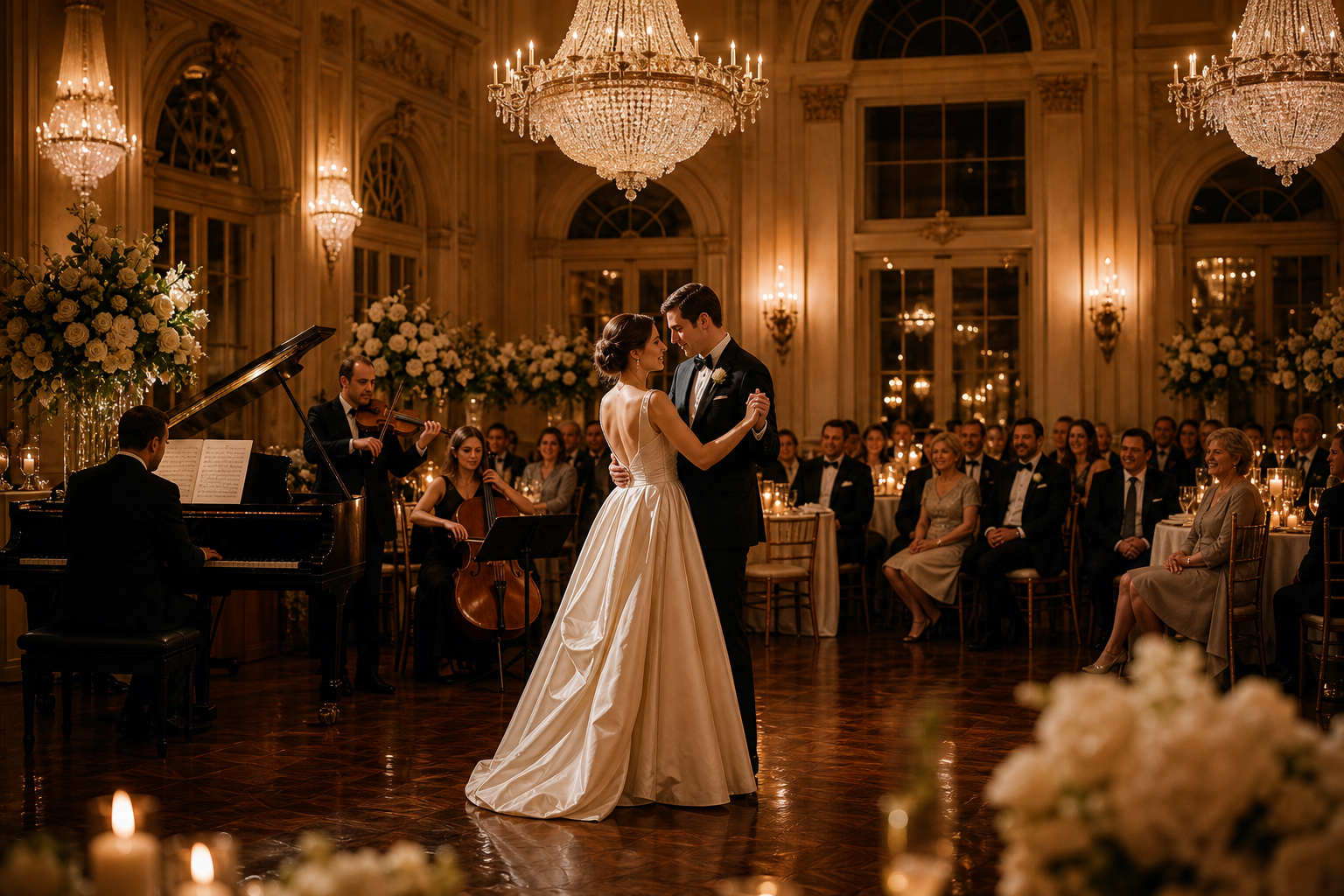
“The Way You Look Tonight” gives you old-school romance without turning the room too sleepy. Written by Jerome Kern and Dorothy Fields for the 1936 film “Swing Time,” it won the Academy Award for Best Original Song and later became a standard through versions by Frank Sinatra, Tony Bennett, Fred Astaire, Michael Bublé, and others. At a wedding, it works because the lyric is flattering, specific, and generous; it sounds like someone looking at their partner across the room and genuinely meaning it.
The Sinatra version is a strong first-dance choice because it has polish and forward motion. It usually runs around 3 minutes and has a gentle swing feel, which lets you do more than sway if you want to. If you are taking one or two dance lessons before the wedding, this is a great candidate for a basic foxtrot pattern, a few underarm turns, and a simple dip at the end. Dance lessons often cost about $75 to $150 per private session, and two sessions are usually enough to make this song look intentional without turning your reception into a performance.
The caveat is arrangement. Some versions are slow and tender; others are brighter and more big-band. Choose the recording that matches your comfort level and venue size. In a hotel ballroom with a 10-piece band, the Sinatra or Bublé feel lands beautifully. In a smaller restaurant wedding, a piano-vocal version can feel more intimate. Give your bandleader a reference version and a target length, especially if you plan to invite parents or guests onto the floor halfway through.
5Unchained Melody
Best for: couples who want a dramatic slow dance with big emotional payoff
“Unchained Melody,” especially the 1965 Righteous Brothers version, is pure romantic drama. It has the kind of vocal build that makes guests stop talking, and that is why it remains a staple for first dances, anniversary dances, and late-night slow sets. The song stands out because it does not rush. It starts with longing, grows into release, and gives your photographer time to capture real expressions rather than forced smiles.
The most famous version runs just under 4 minutes, which is slightly long for a first dance if you are shy. That said, the structure is useful: you can dance privately for the first verse, then have your DJ invite all couples to join at the second verse or final build. The song also carries strong pop-culture recognition from “Ghost,” which can be a plus if you love cinematic romance and a minus if you do not want guests thinking about a movie scene during your dance. Either way, it is a high-impact selection, not background music.
If you hire a vocalist, be careful. This is one of those songs where the final notes can either bring the room to its feet or expose every weakness in the singer's range. A DJ playing the original is often the safer choice unless your band has a proven lead vocalist with the right tone. For a subtler approach, consider an instrumental piano or string version during dinner, then save your first dance for something less vocally loaded. You still get the melody without asking the whole room to sit inside a power ballad.
6Bridal Chorus
Best for: traditional aisle entrances, church ceremonies, and couples who want unmistakable pageantry
“Bridal Chorus,” often called “Here Comes the Bride,” is the most recognizable wedding processional in the world. Richard Wagner composed it for the 1850 opera “Lohengrin,” but in modern weddings it has become less about opera and more about a signal: everyone stands, turns, and knows the central entrance is happening. If you want a classic ceremony with no ambiguity, this is the one.
Its biggest advantage is clarity. Unlike pop songs, it does not require guests to listen for a lyric or wait for a chorus. The opening phrase announces the moment immediately, which is useful in large churches, outdoor venues, or rooms where guests may be distracted. It works especially well on organ, brass, or string quartet, and most professional ceremony musicians already have it in their repertoire. If you are paying a church organist, expect fees to vary widely, but $200 to $500 is common in many regions for ceremony-only service, sometimes with an added rehearsal fee.
The caveat is cultural and religious context. Some houses of worship discourage or prohibit “Bridal Chorus” because of its theatrical origin, while others use it every weekend without concern. Ask your officiant or music director before you fall in love with it. If it is not allowed, choose “Canon in D,” “Trumpet Voluntary,” or “Jesu, Joy of Man's Desiring” for a similar traditional feel. Also decide whether you want only one person entering to it; if the aisle is short, the piece can end almost as soon as it begins.
7What a Wonderful World
Best for: parent dances, family moments, brunch weddings, and receptions with mixed generations
Louis Armstrong's “What a Wonderful World” is a classic wedding song because it widens the emotional frame. It is not only about romantic love; it is about gratitude, beauty, and the people gathered around you. That makes it especially strong for a father-daughter dance, mother-son dance, grandparent dedication, memorial-adjacent moment, or dinner transition after speeches. The message is warm without being sentimental in a sugary way.
The 1967 recording is short, usually around 2 minutes and 20 seconds, which is a gift for parent dances. Many parent dances feel too long because neither person wants to perform; this song ends before the moment becomes awkward. Armstrong's gravelly vocal also cuts through a room differently than a polished crooner, giving the track character and sincerity. For background, the Louis Armstrong House Museum is a strong source for understanding his legacy and why his voice remains so culturally durable.
Use this song when you want the whole room to soften. It pairs beautifully with photo montages, family-style dinner service, or a private last dance if you want to end the night quietly rather than with a club track. The caution is mood: it can feel reflective, even bittersweet, if you have recently lost a loved one. That may be exactly right, but do not spring it on a parent who will be overwhelmed. Tell them in advance and, if needed, shorten the dance to the first verse and final line.
8All You Need Is Love
Best for: recessional music, joyful exits, and couples who want a classic everyone can sing
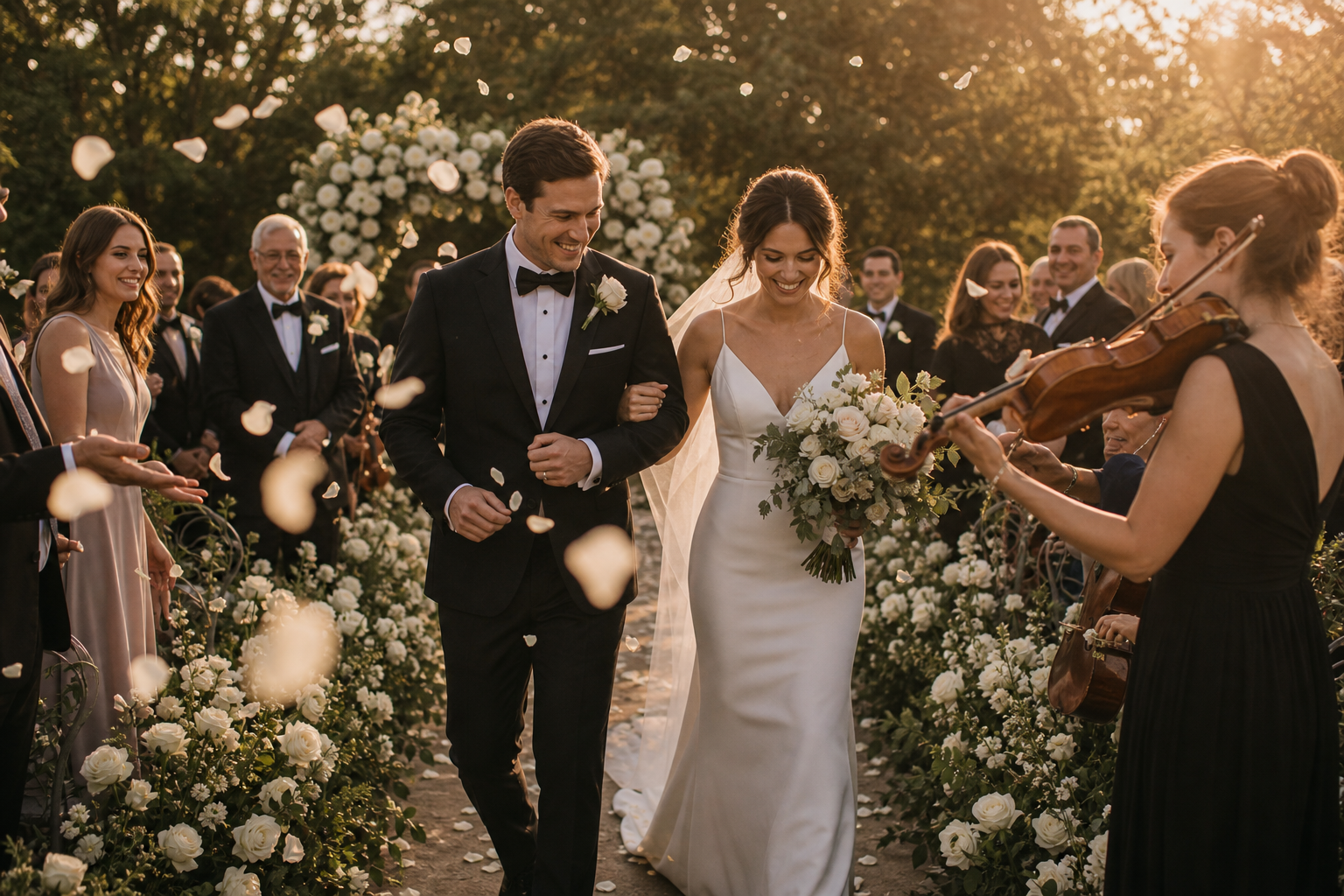
“All You Need Is Love” by The Beatles is one of the best classic wedding songs for the exact second after you are pronounced married. The opening fanfare gets attention, the chorus is instantly understood, and the lyric is simple enough for guests to absorb while cheering, clapping, and taking photos. It feels optimistic rather than formal, which makes it a smart contrast after a traditional ceremony.
The Beatles released the song in 1967 as part of the “Our World” global television broadcast, and that communal spirit still comes through. At a wedding, the recording works especially well for recessionals because the chorus lands quickly and the groove is relaxed enough for a couple to walk, not sprint, back down the aisle. The official Beatles song page gives you a clear reference point if you want to confirm the original version with your DJ or band.
The main planning issue is the intro. Some DJs prefer to cue the song at the recognizable chorus rather than starting from the very beginning, depending on how fast the officiant announces you and how long the aisle is. Ask for a cue point during rehearsal: first kiss, officiant presentation, or first step down the aisle. For live bands, brass or horns make the opening sparkle, but a smaller acoustic group can still pull it off if they simplify the arrangement and focus on the chorus.
9L-O-V-E
Best for: cocktail hour, cake cutting, reception entrances, and couples who want playful vintage style
Nat King Cole's “L-O-V-E” is classic, stylish, and light on its feet. It is not the song you choose for a deeply emotional first dance; it is the song you choose when you want guests smiling with champagne in hand. The spelling-hook lyric makes it instantly memorable, and the swing feel gives your reception a polished mid-century texture without requiring everyone to know ballroom steps.
The most familiar version runs around 2 minutes and 35 seconds, making it ideal for short reception moments. Use it for cake cutting, a champagne tower pour, the couple's reception entrance, or the first song of cocktail hour. It also works well for a live jazz trio because the melody is clean, the form is standard-friendly, and musicians can stretch or shorten it as needed. In many markets, a jazz trio for cocktail hour may cost roughly $750 to $1,800, depending on city, date, travel, and whether sound equipment is included.
“L-O-V-E” is also a smart compromise if one partner wants something classic and the other wants something upbeat. It is polished but not stuffy. If your wedding design includes black bows, martini glasses, a supper-club reception, or a city venue, this song fits the visual language perfectly. Just avoid overusing swing standards back-to-back; mix it with soul, Motown, or soft pop so cocktail hour feels curated rather than themed like a retro lounge.
10Ave Maria
Best for: Catholic ceremonies, sacred spaces, memorial moments, and formal processionals
Schubert's “Ave Maria” is a sacred classic that brings stillness to a wedding ceremony. It is commonly used in Catholic and Christian services, but it can also work in non-religious settings when performed instrumentally. The piece stands out because it creates reverence immediately. If your ceremony is in a cathedral, chapel, historic church, or echoing stone space, the melody can feel almost architectural.
The practical choice is vocalist versus instrumentalist. A trained soprano, tenor, or classical crossover singer can make “Ave Maria” unforgettable, but this is not a casual song for an inexperienced friend. Latin diction, breath control, and pitch stability matter. If you are unsure, hire a professional ceremony singer or choose violin, cello, harp, or organ. Professional ceremony vocalists often charge about $200 to $700 depending on region, rehearsal, travel, and whether they provide their own accompanist.
Before you place it in the ceremony, confirm rules with your officiant or music director. Some churches specify when Marian pieces may be sung, such as during a unity candle, presentation of flowers, communion, or reflection, rather than as a processional. If you love the melody but want a lighter reception mood, use it only during the ceremony and switch to something bright for the recessional. That contrast lets the sacred moment breathe without making the entire day feel solemn.
Classic wedding songs endure because they solve real planning problems: they cue emotion, guide movement, and help guests understand the importance of each moment. Choose the song that fits the job, not just the one with the prettiest title.
Your best final playlist will balance tradition and personality. Anchor the ceremony or first dance with one of these classics, then let cocktail hour and the dance floor show more of your everyday taste.
Frequently Asked Questions
What is the most classic wedding first dance song?
“At Last” by Etta James is the strongest all-around classic first dance because it is elegant, emotional, and widely recognized. “Can't Help Falling in Love” and “The Way You Look Tonight” are better if you want something softer or more upbeat.
How long should a first dance song be?
A first dance usually feels best between 2 and 3 minutes. If your chosen recording is closer to 4 minutes, ask your DJ for a clean fade or invite parents and guests onto the floor halfway through.
Can I use a classic song if everyone else uses it?
Yes, because placement and arrangement make a familiar song feel personal. Use a string version, acoustic cover, shorter edit, or unexpected ceremony placement to make a classic feel tailored to your wedding.
What classic song is best for walking down the aisle?
“Canon in D” is the most flexible processional because it can expand or shorten as people walk. “Bridal Chorus” is the clearest traditional choice if your venue and officiant allow it.
Should I choose live music or a DJ for classic wedding songs?
Use live music for ceremony pieces like “Canon in D,” “Ave Maria,” or “Bridal Chorus” if your budget allows. Use a DJ when the exact original recording matters, especially for Etta James, Elvis Presley, Louis Armstrong, or The Beatles.
What classic wedding song works best for parents?
“What a Wonderful World” is one of the best parent-dance choices because it is short, warm, and not overly romantic. It honors family love without making the dance feel like a performance.
Do I need to license wedding songs myself?
In most typical private weddings, your DJ, band, venue, or streaming provider handles the practical music-use side through their own systems and subscriptions. Do not use random ripped files; give your professionals legal recordings, clear song titles, and exact versions.
How many classic songs should I include in a wedding playlist?
Three to five classics are usually enough: one for the ceremony, one for the first dance, one for a parent dance, and one or two for cocktail hour or dinner. Too many can make the wedding feel generic, so balance them with songs that reflect your actual relationship.


